

This is our first walk around the site, back in November 2025. Before anything gets knocked down or dug up, you need to know three things: what has to be protected, where the services are buried, and where the power will come in.
A protected tree
This tree is staying where it is. The house will be built around it, so it's protected for the whole build, while the area around it is excavated and cleared.
Protecting a tree on a basement job takes planning. Later in the build an arborist assessed it, the roots at the sheet pile line were cut cleanly rather than torn, and the tree got its own watering and nutrient program. You'll see that in Posts 24 and 28.
Finding the hidden sewer
The sewer line runs beneath this section, temporarily buried under the dirt you see here. The surveyor couldn't locate it during the site survey, even though the lid was clearly visible at the time. The soil was only piled on top recently, which is probably why it was missed.
We've taken a spot level to get the depth and invert level of the sewer for our records.
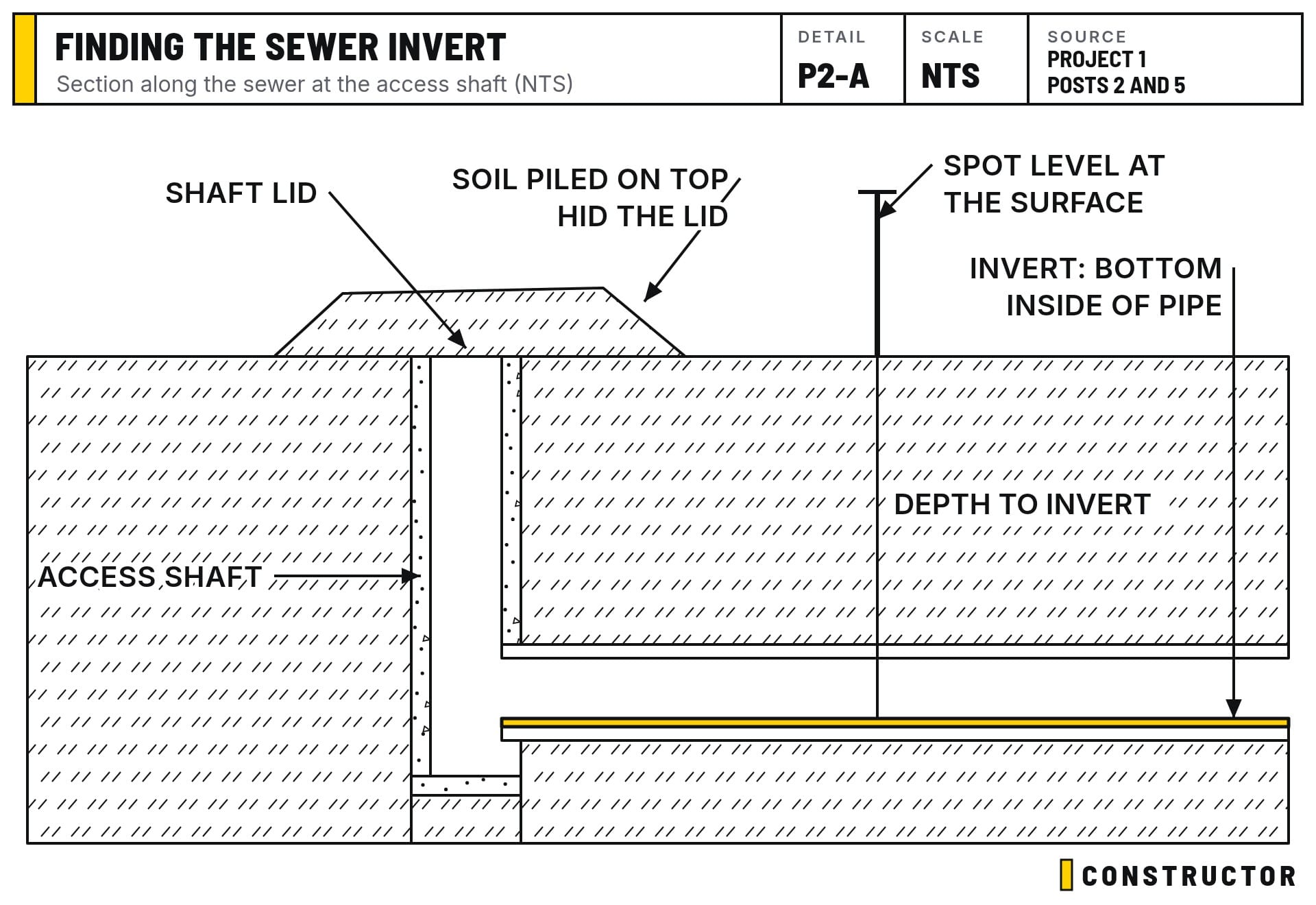
The invert level is the height of the bottom inside of the pipe, measured against the site's survey datum. It's the number engineers care about, because it tells them how deep the sewer sits, how much soil covers it, and whether the new house will need a build-over-sewer approval.
Why the sewer matters for a basement
On this site the sewer runs along the street boundary. The shoring engineer's drawings put its invert at RL 1.15. The ground is at about RL 2.50, so the pipe sits roughly 1.35 m down.
The basement is dug to RL -0.60, nearly 2 m below the sewer. So the sheet piling that holds the ground back has to stay well clear of it. On the drawings the sheet pile line is set back at least 3.1 m from that side.
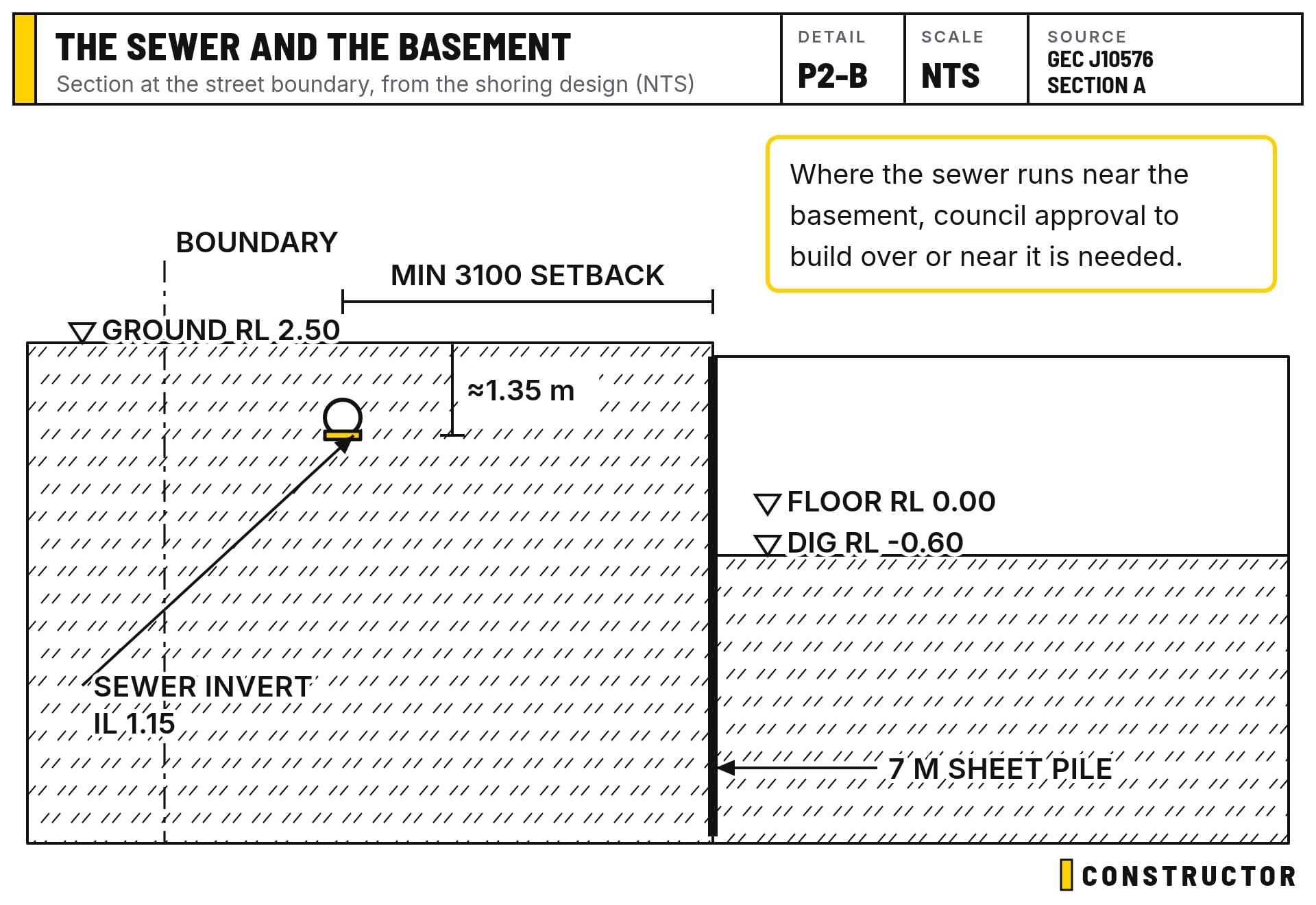
When you build over or close to a council sewer, you need the council's approval before you start. They want to know the pipe won't be loaded or damaged, and that they can still get to it for maintenance. We cover that application in Post 31.
Where the meter box can (and can't) go
We've placed a stake here to mark the spot for the temporary meter box. The final architectural plans for this area were still in progress, but we already knew the permanent meter box couldn't go on this wall.
Walls close to a boundary have fire-separation rules, and they stop a meter box from backing directly onto the neighbour's property. It's a precaution in case the box ever catches fire from faulty wiring. That's possible, though I've never actually seen it happen.
So the permanent box will go on this fence. Putting the temporary power supply for the whole site here now means we won't have to move it a long way later.
Finally, here is the electrical supply conduit. The depths are marked at 750 mm, 600 mm, 700 mm and 750 mm, running up to the meter box just behind this wall. Knowing those depths before you dig stops an excavator bucket finding the cable for you.
Homeowner takeaway
Before site start, ask your builder to locate and level the sewer and any other buried services, and to confirm where the temporary and permanent meter boxes will go. Moving any of them later costs money. Our plan for temporary site power is in Post 3.


