
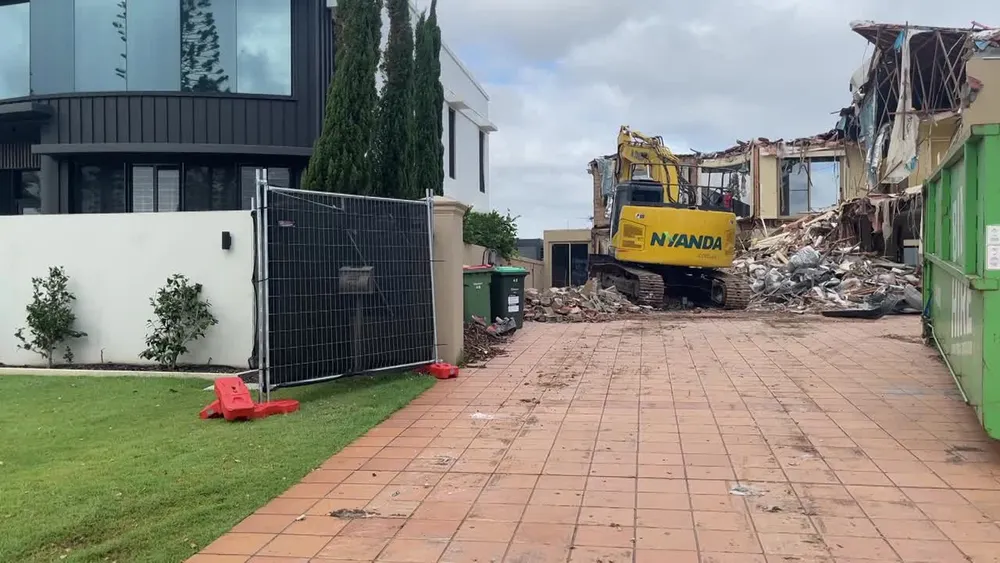
Project 1 is our basement build, and this series follows it from site prep through demolition and beyond. Here's a quick update from the demolition site since yesterday.
The wind picked up yesterday afternoon. It wasn't strong, but it was enough that the demolition crew left part of the structure standing and braced overnight rather than risk it coming down unplanned. Wind is one of the things a demolition plan has to deal with: a half-demolished wall has lost the bracing it used to get from the rest of the house, so it can't take the load it used to.
This morning the crew is back at it. The plan is to sort through a lot of the scrap metal first, run a load to the tip, then clear the back of the house. The remaining section at the front will probably stay until tomorrow.
Like a game of chess
From the front, not much has changed yet. Right now it's all logistics, like moving pieces on a chessboard: bringing material from the outside in and sorting it into piles on the ground.
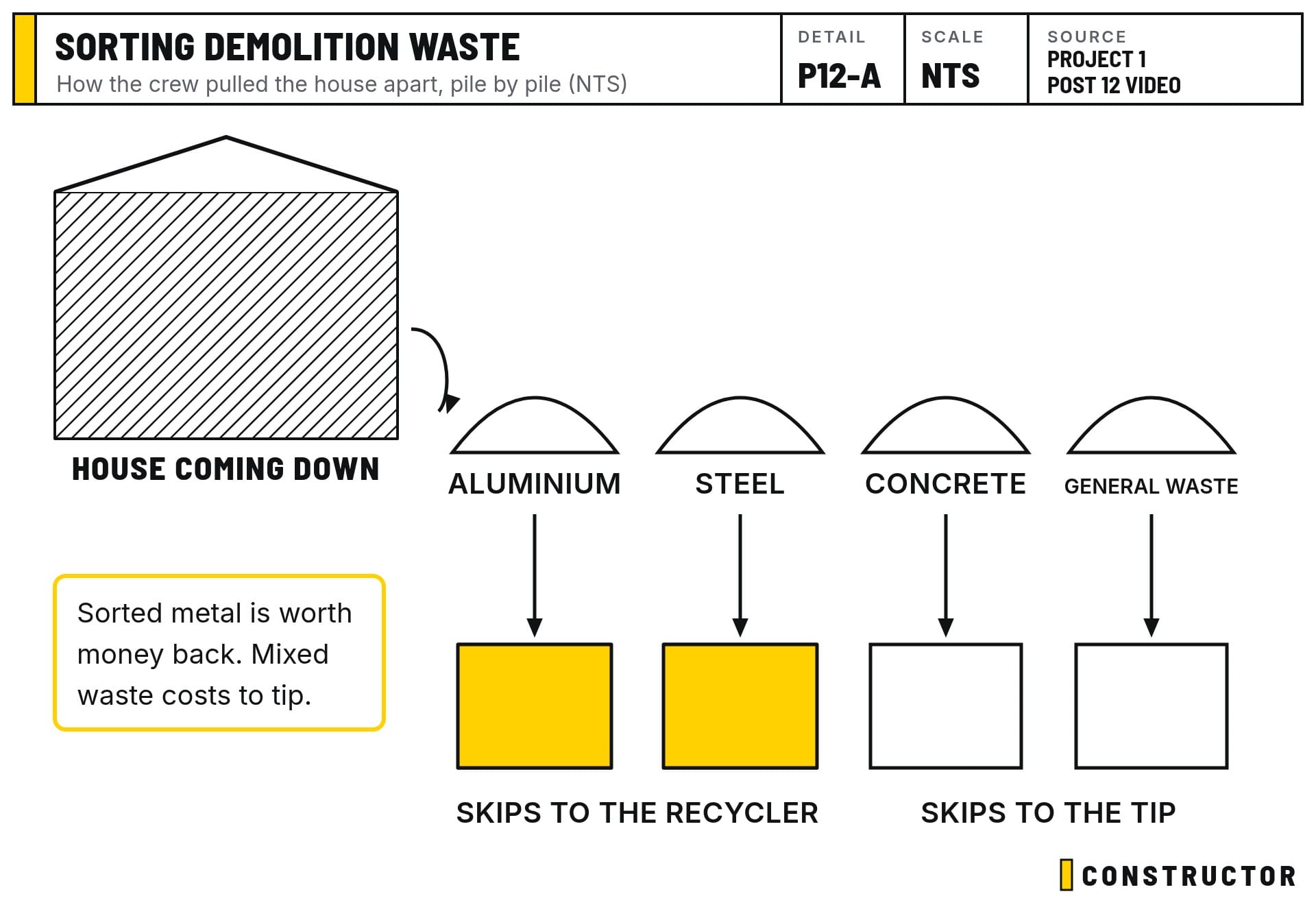
You can see the system working. One pile for aluminium, another for steel. Keeping them separate makes recycling much easier. Once a pile is ready, it goes straight into the skip and gets carted away.
Why sorting pays
Clean, sorted metal has a scrap value, so it goes to a recycler and money comes back. Mixed rubbish is the opposite: you pay by the tonne to tip it. The more of a house that can be pulled out as clean streams (aluminium windows, steel, concrete, timber), the less ends up as expensive mixed waste.
It's slower, because the excavator operator has to pick the building apart with the grab rather than just crush it, but on a big house it makes a real difference to the demolition cost.
If you're planning a knock-down rebuild, ask your demolisher how they separate and recycle materials, and whether the scrap value is reflected in their price. And remember the house must be checked for asbestos, with any asbestos removed by a licensed removalist, before demolition starts.
What's next
We'll keep this cycle going (knock down, sort, clear) until the whole place is levelled. Then we move on to breaking up and removing the concrete.
Most of the site is concrete slab, but we're keeping some of it where it is to use as a hardstand: a firm, level pad for trucks and the concrete pump to set up on (we explain why in Post 5).
Steady progress, piece by piece. I'll keep you posted.


