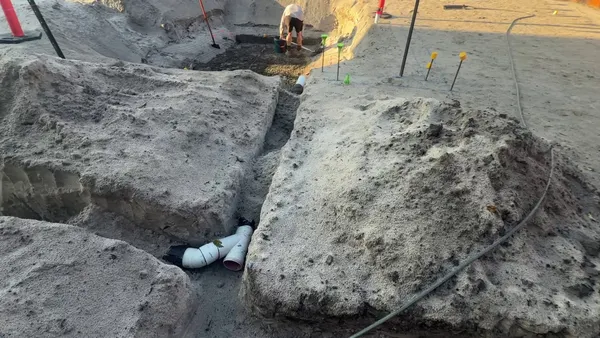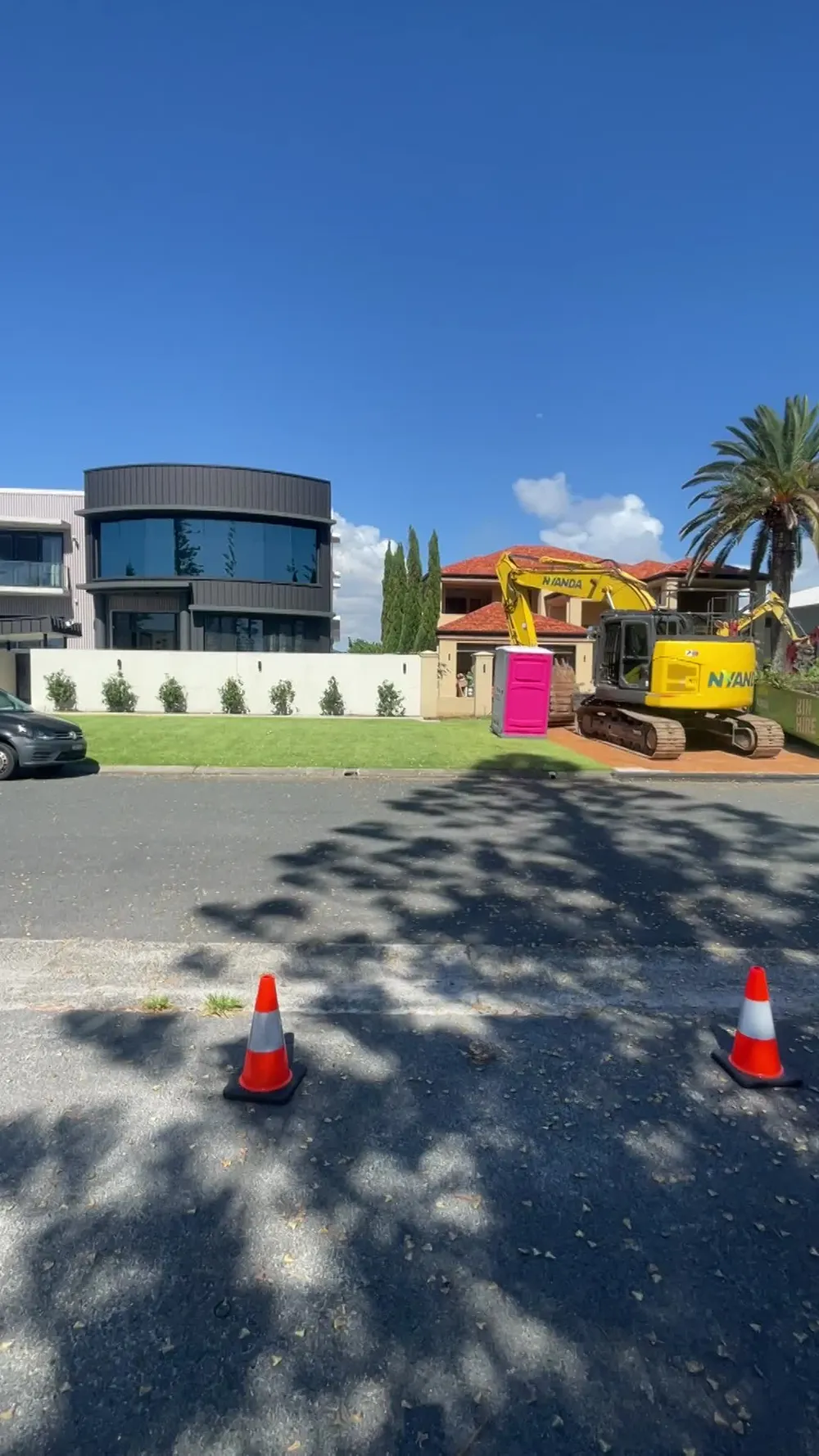
It's been a little while since my last post, thanks to the Christmas slowdown, but we're back at it in the first week of January. Demolition has officially begun: this is day one on site after all the machinery was delivered.
So far we've taken delivery of the water truck (for dust control), a green waste bin and a 25-tonne excavator.
Why the Site Toilet Is Pink
We also just had the site toilet dropped off—a very exciting moment. I don’t know if you’ve ever seen a pink toilet before, but that’s what we went with. The theory is simple: a pink toilet is very easy to spot. I’m also quietly confident that nobody will be settling in for a long scroll on TikTok in there precisely because it’s pink. So, there’s the logic behind our colourful choice.
We chose a sewer-connected unit instead of a chemical toilet because we can hook it straight into the sewer. It's easier to manage, needs no regular pump-outs, and works out cheaper over the length of the project. (We planned this back in Post 5.)
Site Setup and Salvage
Right now, a 5-tonne machine is clearing a space next to the tree. A container arrived earlier this morning, which we'll use for temporary storage. We're keeping the existing side boundary fencing up for two reasons: first, to keep good relations with the neighbour, and second, because we need a fence in place.
If we took it down, we'd expose the old house's block wall to damage from equipment like a rock breaker. That wall is unreinforced: its hollow blocks were never filled with concrete and steel (core-filled), so it has very little strength against a knock. We'll put temporary fencing inside the boundary later.
We also had the salvage team from Red Ned's in yesterday, pulling reusable materials from the house. They're currently stacking aluminium for separation and recycling. They cut out and took the large doors for resale, we've sold the kitchen (pickup is this weekend), and someone has bought the automatic garage door unit.
Over in the salvage pile, we’ve carefully packaged up a crystal chandelier destined for the new build—maybe for a room with high ceilings, perhaps even a bathroom as a joke.
The running gag is that we’ll also find a way to incorporate a massive 2.4m x 2.4m mirror into a toilet in the new place. Because, naturally, everyone wants a toilet with a huge mirror.
Strategic Demolition and Temporary Services
Out the back, the generator is ready to go, but we're giving the neighbours a bit of a break before we start making more noise. The pool is almost fully drained.
The demolition contractors plan to use the pool as a holding pit. Once the main house comes down, a lot of the material goes straight into it. That keeps demolition waste from mixing with the sand and soil on the ground, which would bulk out the weight and push up disposal costs.
To be clear, the pool isn't a permanent tip. The waste comes back out and is removed before the pool shell is broken up, and the hole is then backfilled and compacted in layers to the engineer's specification. Loose fill settles over time, so you can't build over a filled pool without that.
Our 15 KVA generator, with standard 15-amp outlets, is on standby as a backup power source. We also smashed out the heavy glass windows yesterday, which was a relief—they were a pain to move.
Meanwhile, the electricians are on site setting up our temporary power. They've de-energised the house and pulled the main fuse, and we're setting up a temporary meter box using the existing infrastructure. That's much faster than applying for a brand-new connection, especially given the complexities with this property.
The "Green Boy" Power Dilemma
Here's an interesting quirk. On this old street, the green Energex pillar box (where the street supply connects to the property; we call it the “Green Boy”) is actually on the neighbouring property. Historically, a few houses were fed from the same spot.
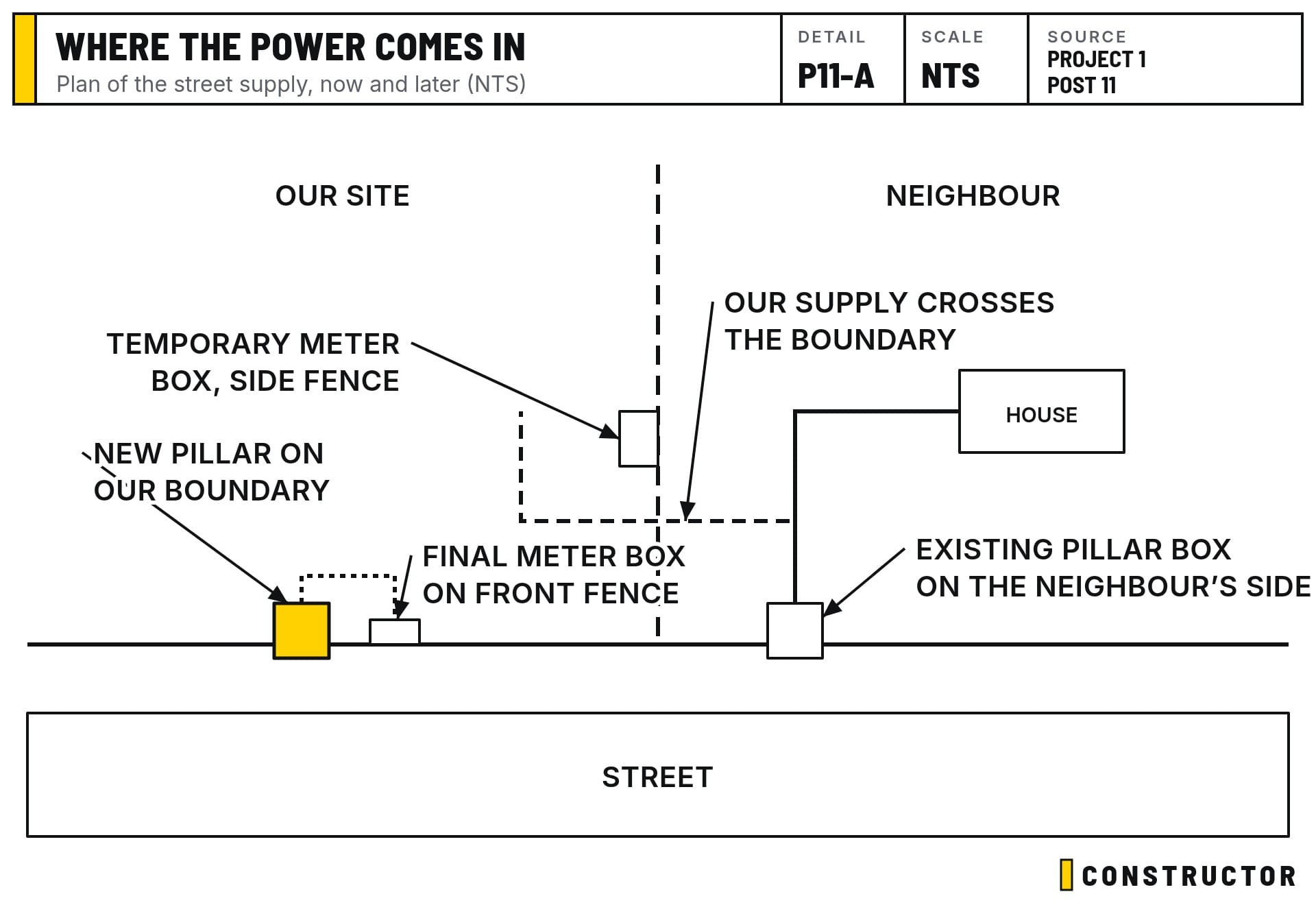
For the permanent build we'll submit a form to Energex (the local network distributor) to have them do the civil works and install a new pillar on our boundary. The final meter box will then go on the front fence.
For now we're installing the temporary meter box on the side fence, with enough slack in the cables to move it to its final position later. That gives us the site power we need to keep going.
The whole house will start coming down on Monday. I’ll be back on site then to show you just how quickly a house can be demolished.
Thanks for following along!