

This is a quick progress update from site, and things are starting to take shape. (New to Project 1? Start the series here.)
Most of the main house is down now, and we've swapped out the bin. The 25-tonne excavator and the 3-tonne mini excavator are still hard at work. Today's goal is to keep going with site establishment and get everything organised.
Getting the container organised
Yesterday took several trips to the hardware store for shelving and racking. The plan is to empty the container, fit the shelving, then reload everything neatly.
We're also putting up another shade structure off the side of the container. Once it's up, it extends out to give us a bigger shaded area to work under.
A working toilet and drinking water
A good part of yesterday went into getting the site toilet fully working, and it's now connected to the sewer, with a hose connection at the back.
We also set up a chilled water bubbler, using a salvaged 40 mm waste pipe, and kept a few floor mats and doorstops left behind by the previous owners. A clean, stocked toilet (yes, including the brush and cleaner) makes a real difference to morale on site.
If you're building, a clean site toilet and a tidy site are good signs of how your builder runs the job.
Looking after the tree
We've run irrigation lines with small sprayers around the protected tree (better than a loose hose) and put them on a Bluetooth timer. The root ball will be covered with geofabric to help hold the moisture in.
Site access and the container fit-out
We've pulled the material from the front of the property back in here, tracked it and rolled it. As it gets wet it will compact down into a solid access way.
Inside the container, we'll run power, fix timber to the walls and line them with plywood. That puts all the site services in one place, and we'll probably add a sub-board for charging tool batteries. The result is a dry, secure hub for our gear.
Careful demolition
The demolition team from Nyanda has been working steadily. Credit to Damien, their site manager: the job is well organised, and the machines come and go like clockwork.
Darren, on the 25-tonne, is very careful, scraping up tiles and clearing space as he goes. Thanks also to Ed on the water truck, who's been keeping the dust down and sorting materials into groups.
They've also started on the pool. First they punched holes in it with a rock breaker on the smaller machine. Now the bigger machine has a ripper on it to break up the structure.
For a 30-year-old pool, it was built thick. Credit to the pool builders back then.
Inside the pool: a core-filled retaining wall
Inside the pool area you can see the retaining wall. It's reinforced concrete blockwork: the hollow blocks have steel bars standing up through them, and the cores (the hollows) are filled with concrete. Starter bars come up out of the footing, and bars at the top are bent into the slab above, so the wall, footing and slab work together.
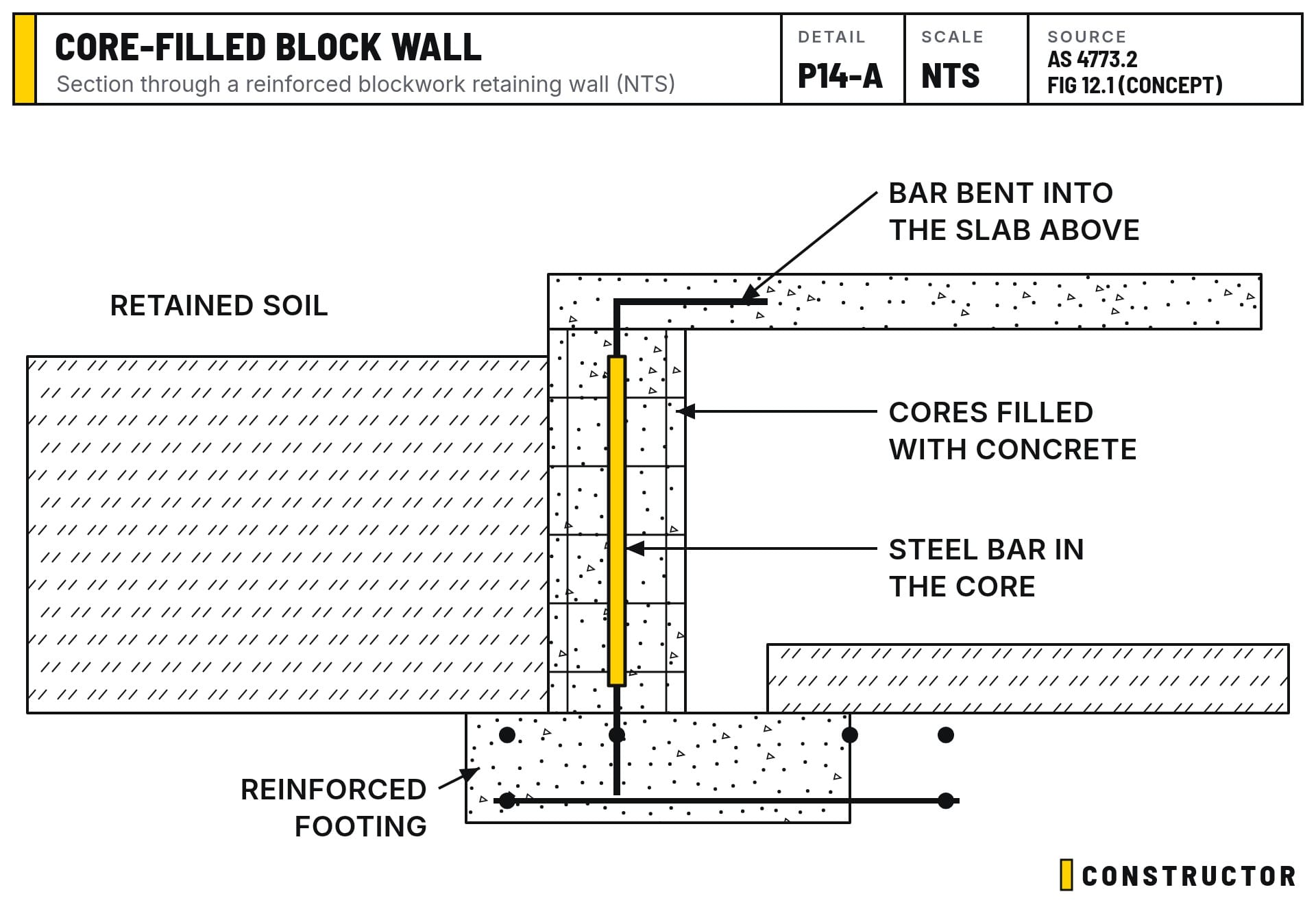
Without the steel and concrete fill, a block wall holding back soil is just stacked hollow blocks, and it can crack and lean. Compare it with the old boundary wall in Post 11, which was never core-filled.
What's next
The crew will keep breaking out the pool, its stairs and the concrete around it, with a couple of hoses running to keep the dust down.


