
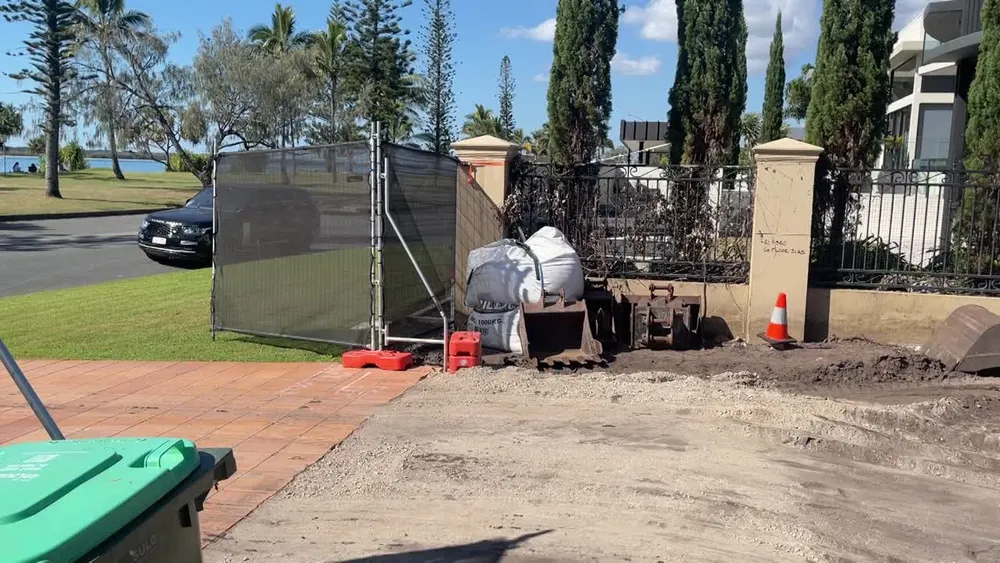
There's not much to see on site today, but it's an important step before the next stage. We're building a certified working platform so we can bring in a piling rig and, hopefully, push the piles in using the weight of the rig, rather than vibrating them in with a vibrating head.
This wasn't in the original plan. We're trialling a different installation method to reduce vibration and the impact on neighbouring houses, which means using a larger piling rig instead of the usual vibrating head.
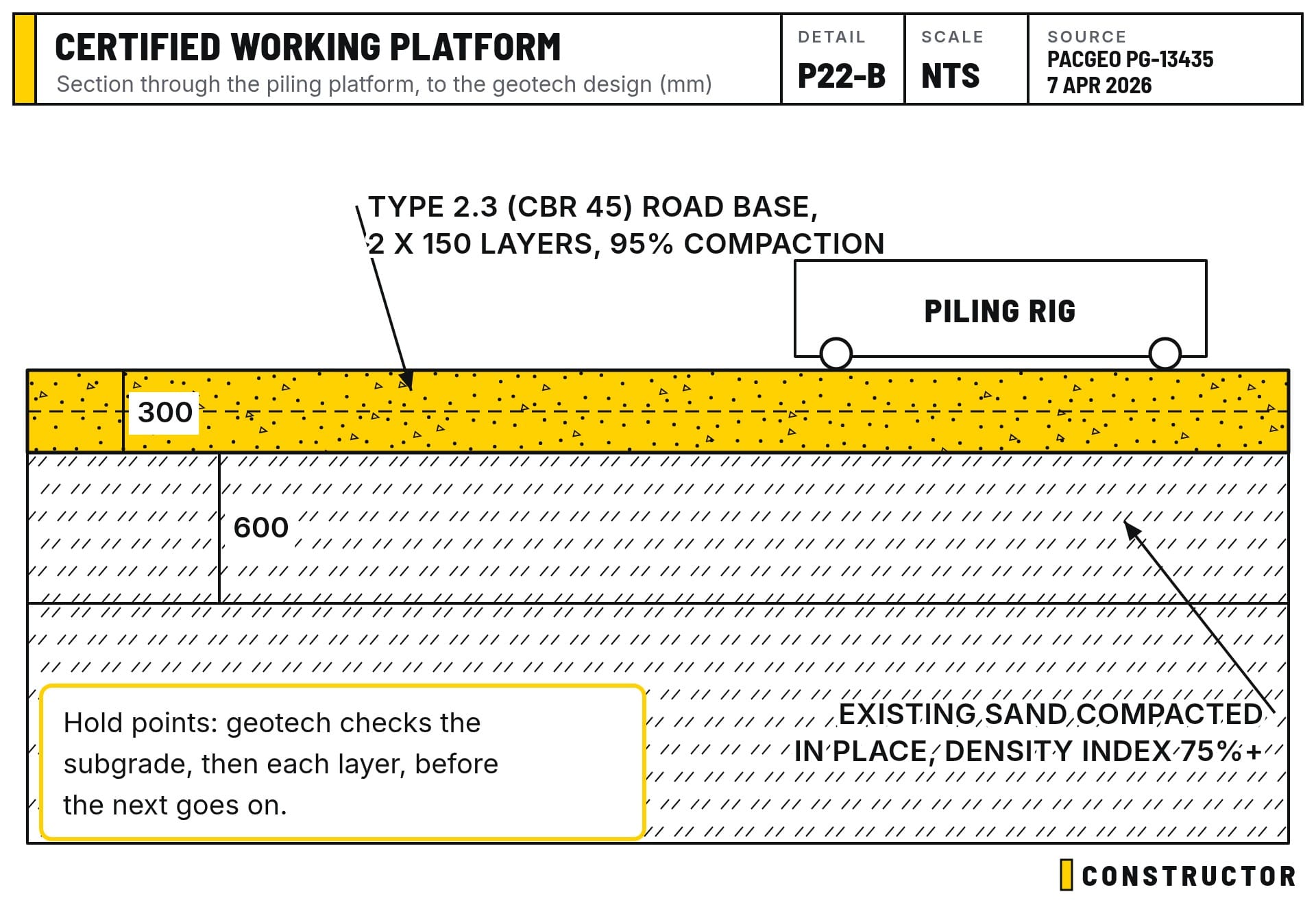
To support that larger machine safely, we need a certified platform with a bearing capacity of 250 kPa: the ground pressure the platform must carry under the rig without sinking. The sand underneath was compacted in place first, as the geotech's design requires (see Post 22).
Testing before we build
The geotechnical engineer was on site this morning. Before they arrived, we pre-rolled the area with a 14-tonne roller.
The geotech then did DCP (dynamic cone penetrometer) testing. It drives a steel cone into the ground with a dropped weight and counts the blows, which shows how firm each layer is. They were also satisfied with the proof roll. Based on that, we were told no geofabric (a woven separation fabric) is needed under the platform before the CBR45 Type 2.3 goes down. That's a graded crushed-rock road base made to the Queensland Main Roads specification.
Building the platform
Next, we build up the platform. Body trucks are arriving about every 25 minutes with CBR45 Type 2.3. We've got a T590 Posi-Track skid steer spreading the material, and I'll be on the roller.
We're building the platform in two 150 mm layers, for a total thickness of 300 mm. The bottom layer is rolled with the roller's weight only; the top layer is compacted with vibration. Each layer is watered, spread and rolled. In total we expect to place about 180 m³ of material, just over 400 tonnes.
Once the platform is finished, the geotechnical engineer will come back to test it with a nuclear density test (which checks how well the material has been compacted) and confirm it meets the required bearing capacity. We're also meeting the piling contractor next week to walk the platform and confirm we're ready.
For now, the focus is keeping the deliveries running smoothly. We've set up access so the body trucks can come in, reverse into position and unload. The first truck got slightly stuck and needed a push out, but as we place and compact material, the platform firms up and access gets easier.
This will probably take the rest of today and possibly into tomorrow. Once the platform is built, tested and certified, we can bring in the rig and start installing the sheet piles, hopefully next week, depending on the piling contractor.
Why this matters to you
Piling platforms can add thousands of dollars to a job. If your site needs piles, ask early whether a certified working platform is included in the price.


