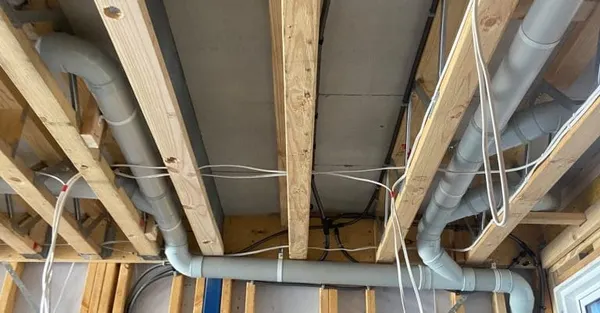


In the construction industry, ensuring quality is paramount. To address and rectify quality issues, the construction industry relies on a crucial document known as the Non-Conformance Report (NCR).
This report plays a pivotal role in maintaining construction standards and specifications, making it a fundamental aspect of quality control in the industry. NCRs are the last process in an ITP based system. ITPs (inspection test plans) are submitted by Contractors, Inspections are carried out using ITC's (inspection test checklists) are carried out by Builders and NCRs are issued and collated in ITR (inspection test reports).
Understanding Non-Conformance Report (NCR)
An NCR is a comprehensive report that meticulously outlines any deviation from the required standards and specifications in construction work or tasks. It serves as a record of quality issues and provides insights into how to prevent them in the future.
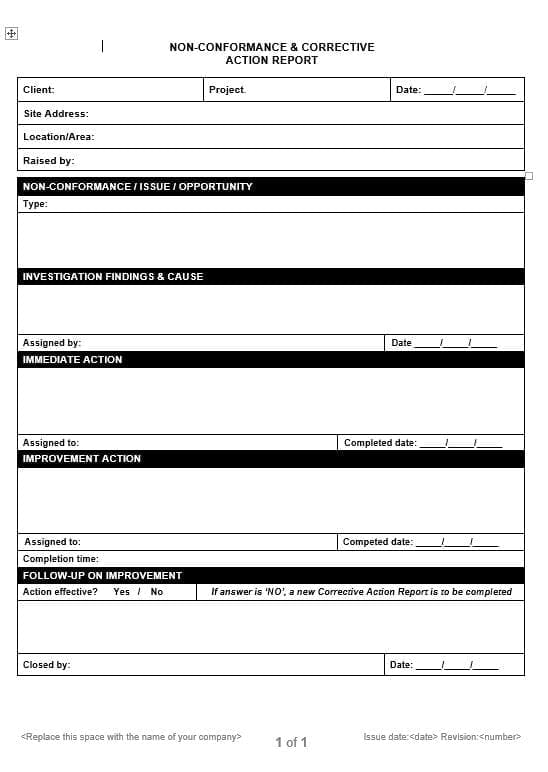
Elements of an NCR Report
When preparing an NCR report, certain key elements should be included to ensure clarity and effectiveness:
- Reason for Development: Clearly state why the NCR report is being generated.
- Identification of the Issue: Explain what went wrong during the construction work or activity.
- Preventive Measures: Suggest measures to prevent similar issues from occurring in the future.
- Corrective Action Taken: Detail the actions taken to address the identified problem.
- Stakeholders Involved: List all parties or individuals who played a role in the NCR report.
- Affected Work Specifications: Specify which aspects of the work or project have been impacted by the non-conformance.
Scenarios for Issuing an NCR
An NCR report can be issued in various situations during the construction phase, including:
- When the constructed work does not align with standard construction drawings.
- When work does not meet the required tolerances as per project specifications.
- If actions are carried out using non-approved methods or standards.
- When approved testing and inspection are not performed.
- If test results do not meet recommended standards.
- When construction materials not accepted as substitutes are used.
- In cases where the constructed design is not feasible.
- When the project team identifies quality defects.
- When approved procedures are not followed.
Dealing with Non-Conformity Report (NCR) in Construction
Efficiently addressing an NCR is crucial for maintaining project quality and client satisfaction. The following steps are typically taken:
- Discussion: Upon receiving an NCR, a meeting is arranged with the issuing party to discuss the issue and propose corrective actions.
- Implement Corrective Action: The suggested corrective action is put into practice.
- Inspection: An inspection is conducted to ensure that the problem has been resolved.
- Formal Documentation: A formal letter or document is prepared, outlining the reasons for the NCR report and the steps taken to resolve the issue.
- Prevention: Actions are explained to prevent the recurrence of similar issues.
- Acceptance and Signature: The report is accepted and signed off by the relevant parties.
Frequently Asked Questions (FAQs)
What is an NCR in construction?
An NCR, or Non-Conformance Report, is a document that explains deviations from required standards and specifications in construction work or tasks.
Who can issue an NCR?
The project team members are responsible for issuing NCRs. It is essential to provide necessary backup to authenticate the information and use NCR reports as a training tool to prevent similar situations in the future.
In construction, the Non-Conformance Report (NCR) serves as a valuable tool for maintaining quality, addressing issues promptly, and ensuring the successful completion of projects.
 Anthony Painter
 Anthony Painter
 Anthony Painter
 Anthony Painter
 Anthony Painter
 Anthony Painter