

Why Sustainable Apartments Matter
When buying or investing in an apartment, sustainability probably isn’t the first thing on your mind. But with rising energy costs, growing climate risks, and a stronger push for greener housing, sustainable apartments are becoming a big topic in Australia’s property market.
The Green Building Council of Australia (GBCA) recently released a report—"Rise and Thrive: Sustainable Apartments for a Resilient Australia"—exploring how apartments can be more energy-efficient, climate-ready, and cost-effective over time.
In this article, we’ll break down the key takeaways in plain English, explore what works (and what doesn’t), and see whether these recommendations hold up in the real world.
The Rise and Thrive Report
Key Takeaways from the Report
The report was published by the Green Building Council of Australia (GBCA). Here's what you need to know.
Who Published It?
The GBCA is a non-profit industry body that promotes sustainable construction in Australia. They are responsible for the Green Star certification, a rating system that assesses how environmentally friendly buildings are.
Why Should You Care?
For home buyers: Choosing a sustainable apartment could mean lower utility bills, healthier indoor air quality, and better long-term property value.
For developers: Following sustainability guidelines might help attract more buyers and meet future government regulations.
For policymakers: Encouraging sustainable apartments could help reduce strain on energy grids, lower carbon emissions, and create more resilient housing stock.
Main Findings in Plain English
Here's what the report says, in plain English.
1. Building Design & Sustainability Features
Modern sustainable apartments are built with energy efficiency and durability in mind. This includes:
Green Star certification – A rating system that ensures buildings meet environmental standards.
Passive design principles – Using smart layouts, insulation, and natural ventilation to reduce reliance on heating and cooling.
Sustainable materials – Choosing materials that are long-lasting, low-waste, and environmentally friendly.
2. Energy Efficiency & Cost Savings
One of the biggest advantages of sustainable apartments is lower utility bills. The report suggests:
- Solar panels & battery storage – Allowing buildings to generate and store their own electricity.
- Water-saving systems – Efficient fixtures that reduce water use without compromising performance.
- Smart energy management – Automated lighting and appliances that cut unnecessary power use.
3. Resilience & Climate Adaptation
With extreme weather becoming more common, apartment buildings need to be more resilient. This means:
- Flood-resistant designs – Raised foundations, permeable surfaces, and better drainage to prevent water damage.
- Heatwave-friendly construction – Using materials that reflect heat and improve ventilation to keep buildings cooler naturally.
- Storm-proofing – Stronger windows, reinforced structures, and better emergency planning.
4. Affordability & Investment Benefits
Sustainable apartments aren’t just good for the environment—they can also be a smart investment. The report argues that:
- Lower running costs – Reduced electricity and water bills mean long-term savings for homeowners.
- Higher resale value – Buyers are increasingly looking for energy-efficient properties.
- Government incentives – Some sustainable developments receive tax breaks or rebates.
Biases in the Report
The "Rise and Thrive" report offers valuable insights, but it’s worth remembering that no report is completely unbiased.
1. Green Industry Advocacy
The Green Building Council of Australia (GBCA) is a strong advocate for sustainability in construction. This means:
✅ The report promotes Green Star-certified buildings, as GBCA developed the certification.
✅ There’s an emphasis on industry-led change rather than government mandates.
✅ The potential downsides of sustainable construction—such as higher upfront costs—are not explored in depth.
2. Industry Partners
Like most GBCA reports, it was produced with industry partners, and the GBCA's membership includes developers, banks and product suppliers who benefit when green building grows. That doesn't make the findings wrong, but it's worth keeping in mind.
For example:
- Are green loans actually cost-effective for borrowers?
- Will developers prioritise genuine sustainability or what’s easiest to market?
3. Policy Recommendations vs. Reality
The report assumes that sustainability in apartment design is a win-win for developers, buyers, and policymakers. But in reality:
- Tight margins push some developers to build to the minimum standard rather than for long-term sustainability.
- Buyers often focus on purchase price rather than ongoing savings.
- Governments may struggle to enforce sustainability regulations due to industry push back.
Shortcomings and Gaps in the Report
The "Rise and Thrive" report makes a solid case for sustainable apartments, but it skims over or oversimplifies some important areas. Here are the biggest gaps:
1. Limited Discussion on Retrofitting Existing Apartments
Most of the report focuses on new developments, but what about the millions of existing apartments in Australia?
- Older apartment buildings are often energy-inefficient, poorly insulated, and expensive to maintain.
- The report lacks a clear strategy for retrofitting these buildings to meet modern sustainability standards.
- Example: Many apartment owners can’t install solar panels because they don’t own the roof—how does sustainability work for them?
2. Cost Barriers for Low-Income Buyers
While the report highlights long-term savings, it does not fully address the upfront costs of sustainable apartments.
Energy-efficient materials, solar panels, and smart technology increase construction costs, which may lead to:
- Higher purchase prices for buyers.
- Developers passing costs onto consumers, making sustainable apartments unaffordable for many.
- The report suggests green home loans as a solution, but it doesn’t explore whether these loans are actually affordable.
3. Real-World Implementation Challenges
The report makes sustainability seem straightforward, but it glosses over the real-world challenges, such as:
- Developer reluctance – Tight margins push some developers to build to the minimum standard, especially in high-demand markets.
- Regulatory enforcement – Who ensures that sustainability measures are actually followed?
- Strata issues – Apartment buildings are run by an owners' corporation (a body corporate in Queensland), and getting owners to pass a resolution for sustainability upgrades can be slow and difficult. Depending on the state and the upgrade, it may need a special resolution.
Example: Installing EV chargers in an existing apartment building sounds great, but if enough owners vote against it, the upgrade may never happen.
4. The Role of Government Incentives
The report expects the market to push sustainability forward, but in reality, government incentives and regulations are often needed to make it happen.
- It doesn’t explore whether tax breaks, grants, or subsidies could speed up adoption.
- Other countries have stricter sustainability laws—how does Australia compare?
- Without government support, sustainability may remain a premium feature rather than an industry standard.
Key Assumptions the Report Makes
Future climate and market conditions stay predictable
The report assumes that:
- Climate change will gradually worsen, allowing time to adapt.
- Property markets will remain stable, making sustainable housing a good investment.
- Energy prices will continue to rise, making energy-efficient apartments more attractive.
Reality check:
❌ Climate disasters (bush fires, floods, heatwaves) are accelerating faster than expected, creating urgent risks for housing.
❌ Economic downturns could make affordability a bigger concern than sustainability.
❌ If energy prices suddenly drop due to new technology or policy changes, sustainability may not seem as urgent to buyers.
Who Is This Report For, and Why Does It Exist?
Knowing who the "Rise and Thrive" report is aimed at helps make sense of its goals—and where it falls short.
Who is the primary audience?
The report is aimed at:
- Developers & Builders – Encouraging them to adopt Green Star-certified construction methods.
- Banks & Investors – Promoting sustainable apartments as a profitable long-term investment.
- Government & Policy Makers – Advocating for policies that support green building initiatives.
- Home buyers & Renters – Positioning sustainable apartments as a better housing choice.
Why does it exist?
While the report offers real insights into sustainability, it also serves as a promotional tool for:
The Green Building Council of Australia (GBCA) – Strengthening its position as Australia’s authority on sustainable construction.
- Industry partners – Promoting green home loans, sustainable building products, and new development projects.
- Policymakers – Encouraging government support for Green Star initiatives.
What This Means for Apartment Buyers
The "Rise and Thrive" report paints a pretty positive picture of sustainable apartments, highlighting the perks for homeowners, investors, and the environment. But if you look past the industry-friendly spin, there are some key insights that everyday Australians should consider.
If you’re in the market for an apartment, sustainability features can offer long-term value, but only if:
✅ The energy savings outweigh the upfront costs—check how much extra you’re paying for green features.
✅ The building has meaningful sustainability measures—not just token efforts like "green branding."
✅ You plan to stay long enough to benefit from the lower bills.
✅ Look beyond the marketing—check actual energy efficiency ratings and building materials.
✅ Ask about body corporate rules—some sustainability features (like solar panels, EV charging and the fire suppression requirements) may be hard to retrofit later.
My view: smart meter boxes, vehicle-to-grid (V2G) EV charging, batteries and solar with smart inverters are the future of electricity for Australian homes, apartments included. Ask whether the building's electrical design allows for them.
FAQS
1. How do I know if an apartment is truly sustainable and not just marketing hype?
Look for independent certifications like Green Star (by the Green Building Council of Australia) or NatHERS energy ratings. Also, check for practical features like double-glazed windows, high-efficiency heating/cooling systems, and smart water management.
2. Can I install solar panels or other sustainable upgrades in an older apartment building?
It depends on the body corporate. Many apartment owners don't control the roof or shared infrastructure, which makes upgrades like solar panels difficult. Look for buildings where the body corporate already supports sustainability upgrades.
3. Are there downsides to buying a sustainable apartment?
The biggest downsides are higher upfront costs and the risk of green-washing (where sustainability claims are exaggerated). Also, some buildings may have strict body corporate rules that limit personal upgrades like EV chargers or extra insulation.
Further Reading
 Mastering Energy Efficiency: Air Sealing & Insulation TipsBuilding an energy-efficient home is more than just a trend; it’s a responsibility. Dive into the intricacies of air sealing, insulation, and the importance of thermal mass. Discover how these elements can drastically reduce energy consumption and promote sustainability.
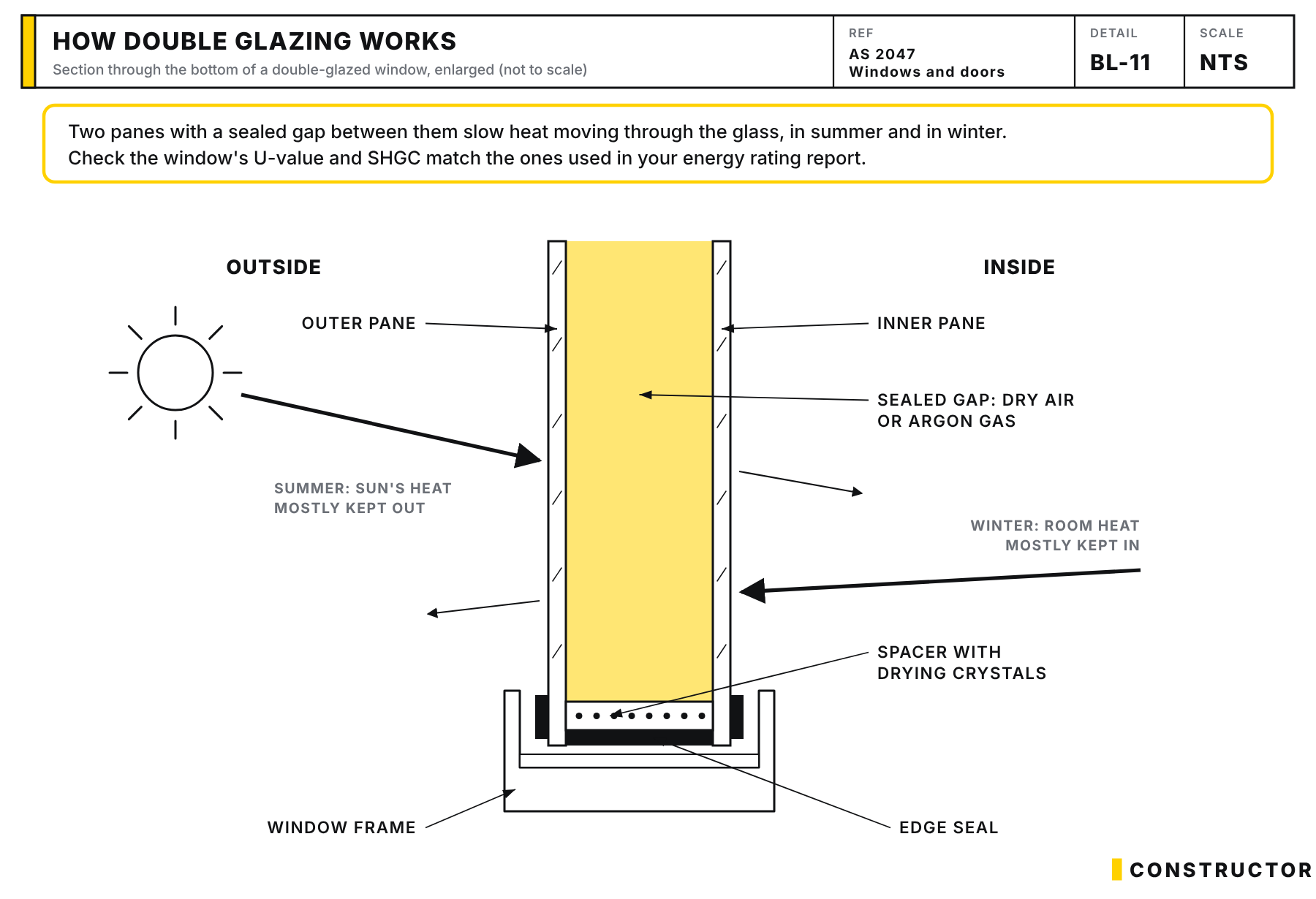 Glazing for Your Home: Comfort, Energy, and Cost InsightsGlazing greatly impacts your home’s comfort, energy efficiency, and costs. Understanding glass types, frame materials, and installation can help you optimise thermal performance, lower energy expenses, and improve sustainability in your new home.
 Optimizing the 4 Control Layers for High-Performance HomesBuilding an energy-efficient home requires a good understanding of the four control layers: water, air, vapour, and thermal. In this post we look into how project builders can optimise these layers, ensuring homes are comfortable, sustainable, and cost-effective.
 Why New Homes Lack Energy Efficiency: Time for AccountabilityDespite the advancements in building science, many new homes remain energy sieves. Why? The focus of most project builders is on profits rather than energy efficiency. As homeowners pay top dollar for new homes, they later find themselves burdened with high energy costs.
PS: If you haven’t tried out our new AI tools yet, here are the links to check them out!
Why try them? Got construction questions you need answers to?
Our specialised AI-powered tools are built on our extensive knowledge base, including blog posts, checklists, and subject-specific content, reports and more.
All of this is tailored to help you navigate construction with confidence, get answers to your questions.
Vote for our next set of AI tools by heading over to our new forum and adding your vote to this post HERE.


