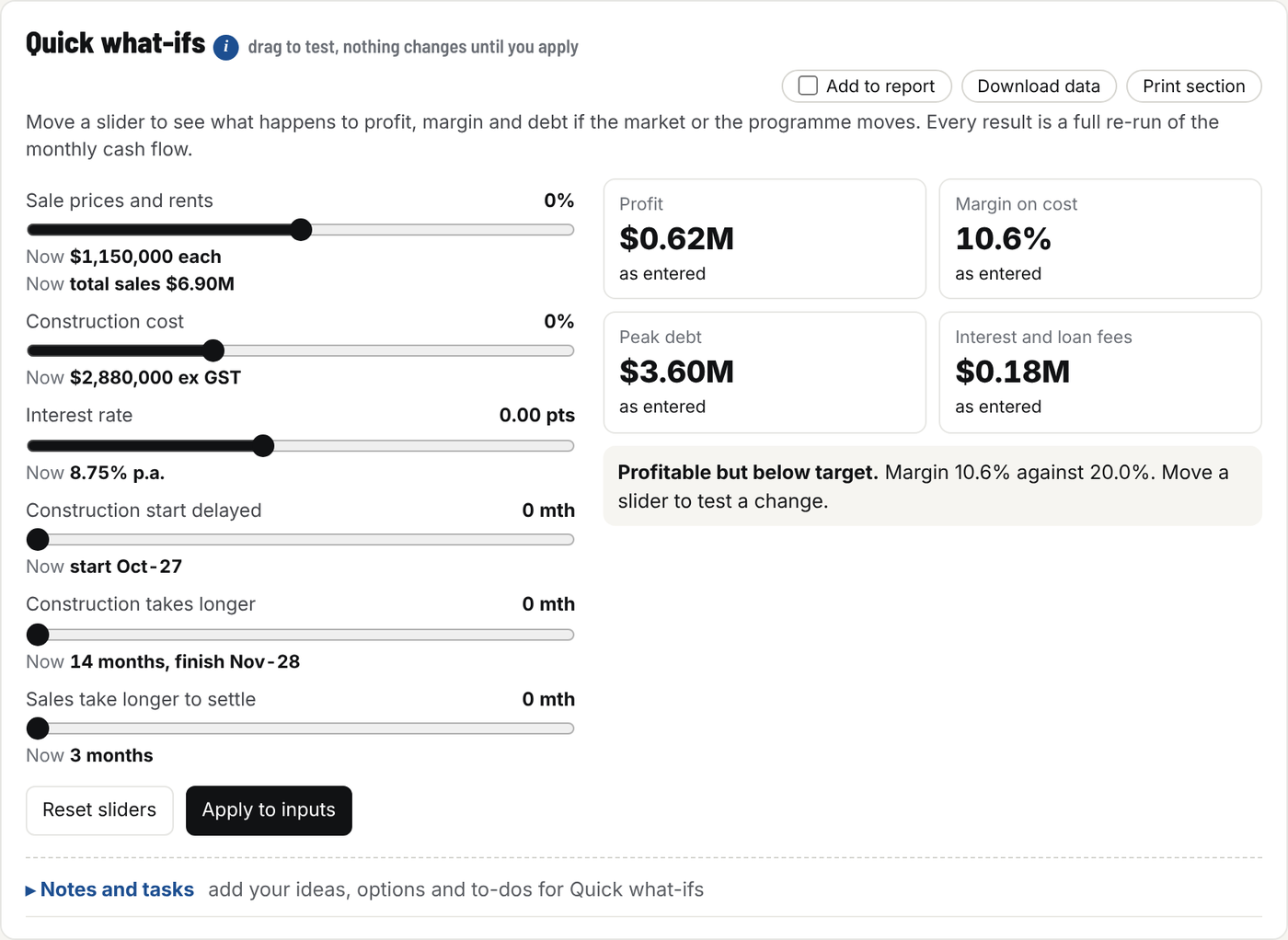
A block comes up with room for six townhouses. The agent says they will sell for about $1.15 million each. The land is $1.45 million and a builder thinks $2.9 million will build them. That's $6.9 million of sales against about $4.3 million of land and building. It looks like plenty.
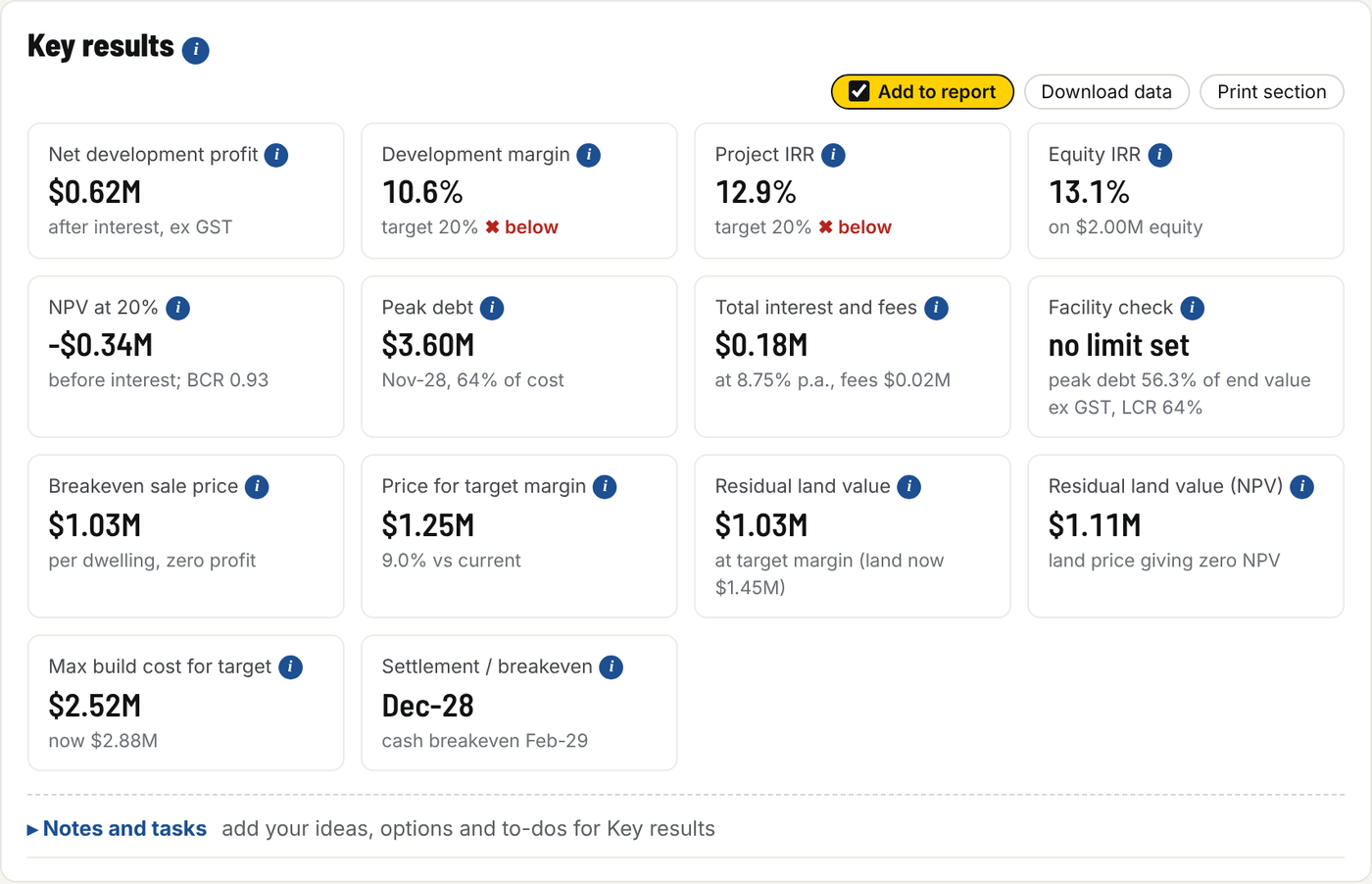
Run it properly and it isn't. In the worked example that comes with C26, once you add GST, stamp duty, the agent, consultants, council charges, holding costs and two years of interest, the profit is about $616,000. That's a 10.6% margin. Most lenders and investors want 15 to 20% before they'll back a project like this, because one bad surprise can wipe out a thin margin.
To make 20%, you'd need to pay no more than about $1.03 million for that land, not $1.45 million. Or sell each townhouse for about $1.25 million. That's the number to know before you sign for a site.
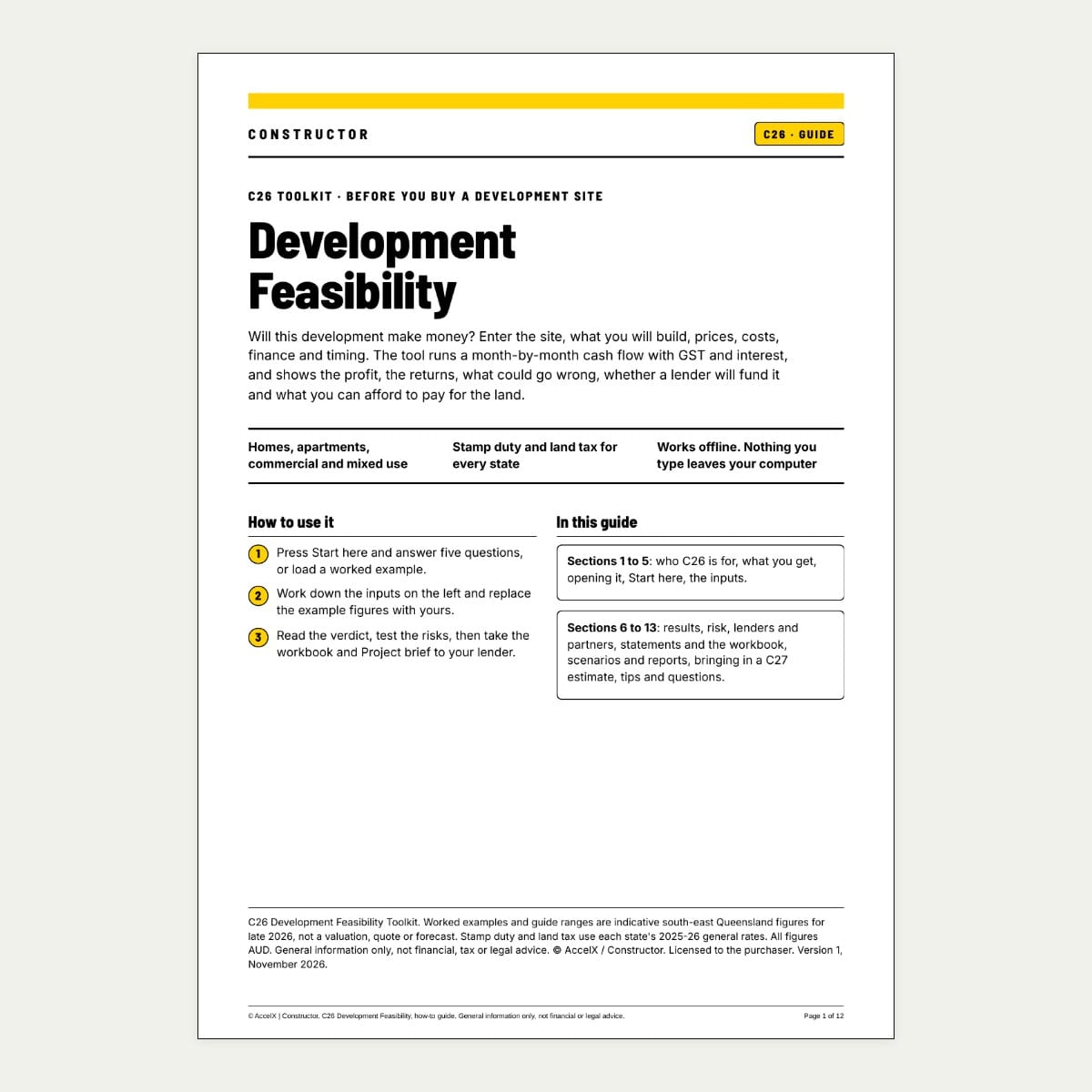
C26 Development Feasibility works it out before you buy the site, sign a contract or talk to a lender.
The questions it answers
- Will it make money? The profit and the margin on cost, after every cost, including interest.
- What can I pay for the land? The most you can pay and still hit your target margin.
- What has to go right? The sale price you need, and the most the build can cost.
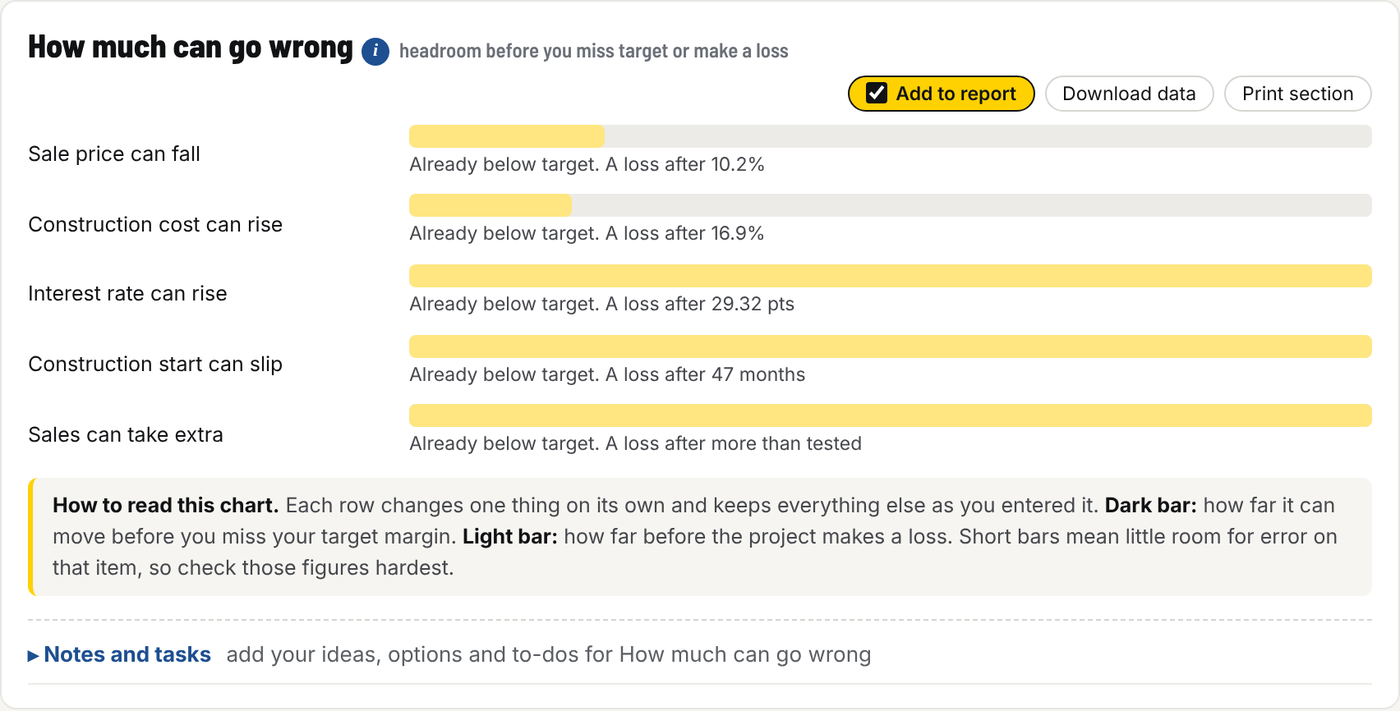
- What could go wrong? How far prices, costs, interest rates and delays can move before you miss your target, and before you make a loss.
- Will a lender fund it? Loan to cost, loan to value, presales and interest cover, each with a pass or fail.
- Selling off the plan? When your presales are signed, split deposits, and how many months you have before the sunset date lets buyers walk away.
What it looks like
This is the six-townhouse example on a Brisbane site.
How it works
- Start here. Answer five quick questions: what you're developing, the state, the numbers you know, your target margin and when you'd settle. Or start from one of ten worked examples, from townhouses and a duplex to strata warehouses, shops and offices, a pre-leased childcare centre, and apartments over shops.
- Make it yours. Work down the inputs: the land, what you'll build, sale prices or rents, costs, finance and timing. Stamp duty and land tax are worked out for the state you pick.
- Read the answer and test it. The verdict, the key results, what could go wrong, and whether a lender will fund it. Save each option and compare them side by side.
- Take it to your lender. Export the Excel workbook, print a one-page Project brief, or build a full report with your name on every page.
Words you'll see, in plain English
- Margin on cost: the profit as a share of everything the project cost. The usual yardstick for whether a development is worth the risk.
- Residual land value: the most you can pay for the land and still make your target margin.
- Peak debt: the most you'll owe the lender at any point, usually just before the sales settle.
- Margin scheme: a way of working out GST on new homes that can lower the GST you pay. Ask your accountant whether you can use it.
Who it's for
C26 is for people developing sites to sell or to keep: a duplex, a few townhouses, a small apartment building, or commercial space such as warehouses, shops, offices, childcare or medical. It's sold on its own, not in a checklist bundle.
Building one home to live in? Start with C27 Build Cost Estimator instead. If you've worked out a build cost in C27, you can bring it straight into C26.
What's in the Toolkit
- The C26 Development Feasibility tool, which runs in your web browser on your own computer. It works offline and your figures never leave it.
- An Excel workbook with the same formulas, so your accountant, valuer or lender can check every step.
- Ten worked examples, residential, commercial and mixed use.
- Development Feasibility Explained, a 28-page guide to the ideas, a how-to guide for the tool, and a questions and answers sheet.
- A How to use tab, a Glossary and an i on every input, result and chart, notes and tasks for every section, and "Check these figures" boxes for duty, land tax and costs.
- A one-page Project brief and a report builder for your lender or partners.
- A licence key for up to three of your devices.
It's a calculator, not a valuation, a quote or financial advice. The worked examples use indicative south-east Queensland figures for late 2026. Before you commit, get a valuation, firm quotes, and advice from your accountant and lender.
C26 - Development Feasibility Toolkit
$249.95 AUD
Form factor: Browser app (offline, private) + Excel workbook, 28-page guide, how-to guide, questions and answers, 10 examples, licence key for 3 devices
When to use: Before you buy a development site, sign a contract or talk to a lender
Will it make money, what can you pay for the land, what could go wrong and will a lender fund it. Sold on its own, not in a bundle.
Questions? Email support@constructor.net.au.