Most of our checklists help you build a new home properly. C21 is different: it's for the day you're about to buy one that already exists. A pre-purchase building inspection is one of the cheapest bits of insurance in the whole property process, but only if you know what you're paying for, what the report actually means, and what to do with it before you sign.
This post walks through the new C21 Pre-Purchase Inspection Checklist: what it is, what it does, when to use it, why it's worth your time, and what you get out of it.
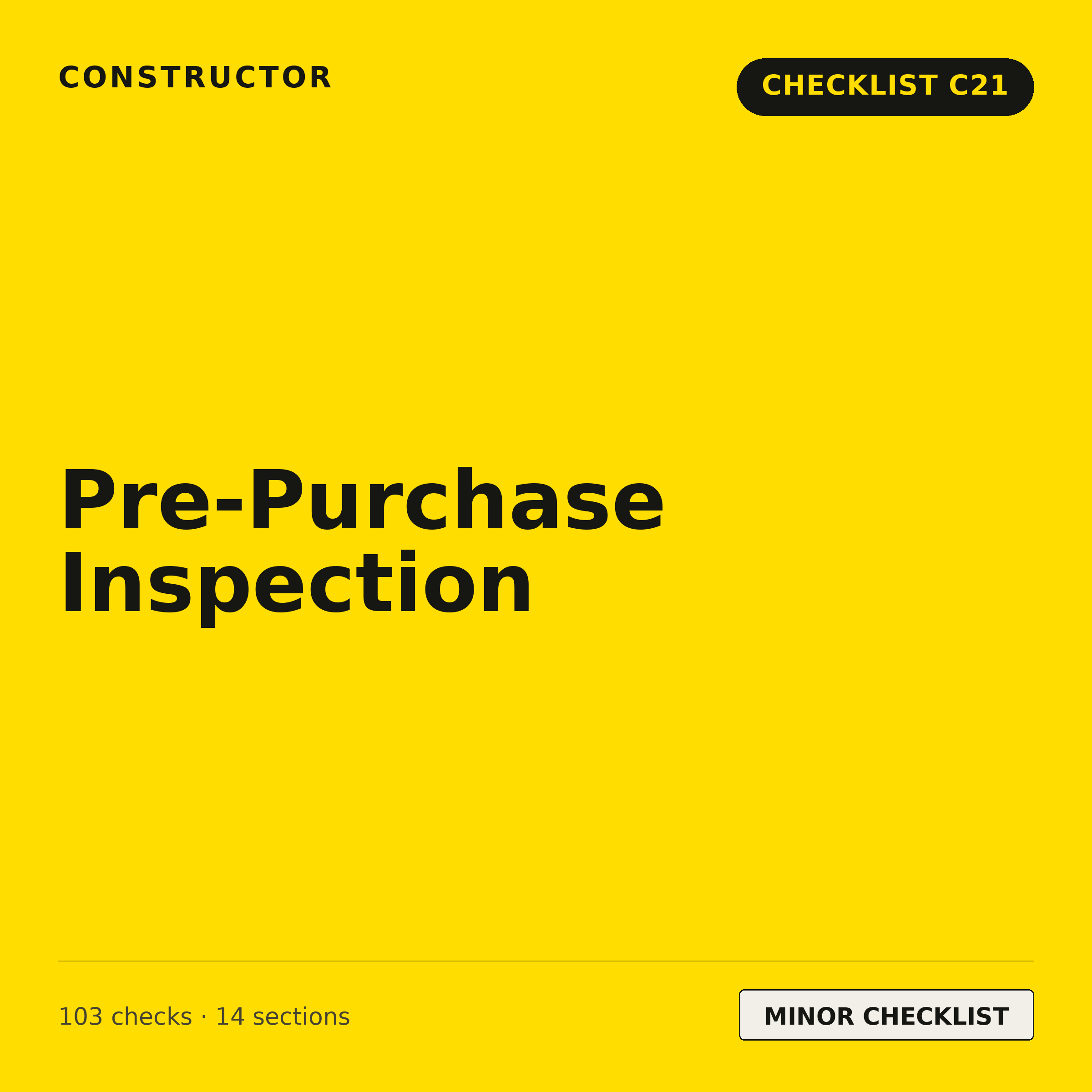
C21 - Pre-Purchase Inspection Checklist
$59.00 AUD
Checklist Type: Minor
Form Factor: Fillable, print-ready PDF (A4, 25 pages)
When to use: Buying an existing home: before you book the inspector, through to signing or your conditions expiring
A 103-point checklist that follows what a licensed inspector checks under AS 4349.1, plus plain-English guides to reading the report, so you can act on it before you sign.
What it is
C21 is a fillable, 25-page checklist with 103 checks across 14 sections. It follows what a licensed inspector looks at when they inspect a house to AS 4349.1, the Australian Standard for pre-purchase inspections of residential buildings.
Every check is written as a plain question, followed by a short hint line explaining why it matters and what a problem usually looks like. Where an item is backed by a specific clause of an Australian Standard or the National Construction Code, there's a numbered reference you can follow to the source.
After the checks come three explainer pages that most buyers never get from anyone:
- Understanding defect severity: what "safety hazard", "major defect" and "minor defect" actually mean in an AS 4349.1 report, and the Standard's own defect-type key (damage, distortion, water penetration, material deterioration, operational, installation).
- What the inspection does NOT cover: structural engineering, full electrical and plumbing compliance, pool safety, asbestos sampling, timber pests, approvals and title.
- Getting remedy costs and negotiating: how an indicative remedy-cost schedule works, why it isn't a quote, and how buyers use it alongside their solicitor's special conditions.
It finishes with a one-page result sheet (tally, follow-up list and a go / negotiate / walk-away decision) plus notes, photo and references pages.
C21 is a companion to the C1–C20 series. Those checklists follow a new build from buying land to the 6-month maintenance inspection. C21 covers the other path into home ownership: buying a house someone else built.
What it does
C21 doesn't replace your inspector, and it doesn't turn you into one. What it does is close the gap between the inspection and your decision.
Most buyers book an inspection, receive a long PDF a day or two later, skim the summary, and phone the agent. The words in that report have precise meanings under the Standard, and the limitations section matters as much as the findings. If you don't know that, it's easy to read a carefully worded report as either "all fine" or "run for the hills" when it's neither.
C21 gives you:
- A walk-through you can do with your inspector, or on your own before you book one, using simple FINE / LATER / ISSUE marks: satisfactory, not inspected or couldn't be assessed, or a defect noted.
- A way to read the report properly, so "major defect" and "not inspected" mean the same thing to you as they do to the person who wrote them.
- A clear next step for every issue: which licensed specialist to call (electrician, plumber or gas fitter, timber pest technician, asbestos assessor, engineer) and what to ask your solicitor or conveyancer.
When to use it
Timing is everything with a pre-purchase inspection. The findings are only useful while you can still act on them.
- Before you book an inspector. Section 1 covers what to check first: is the inspector licensed, insured, inspecting to AS 4349.1, and arranging (or pointing you to) a separate timber pest inspection to AS 4349.3? It also covers access: a locked room or a car parked over the manhole limits what can be seen.
- At the inspection. If you can attend, walk Sections 2–14 alongside the inspector and ask about anything you mark ISSUE or LATER. If you can't attend, use the checklist at the open home so you know what to ask about.
- When the report lands. Read it against Sections 15–17 so you understand the severity of each finding and what the report deliberately doesn't cover.
- Before you sign, or before your conditions expire. A report that arrives after the cooling-off period, or after the contract goes unconditional, limits what you can do with it. Make sure the inspection, the specialist follow-ups and your solicitor's advice all happen while you can still negotiate or walk away.
Why use it
Because the expensive problems in existing homes are rarely the ones you see on a Saturday-morning open home. They're the ones that show up a few months after settlement:
- Water. Ground that doesn't fall away from the house. A downpipe discharging onto the soil beside the slab. An air-conditioner condensate line dripping next to a footing. A shower with no flexible sealant at the floor-to-wall joint. Each of these is cheap to fix early and very expensive to fix after it has damaged the structure or finishes around it.
- Roofs. Valley flashings, ridge capping and the junctions where roofs meet walls, gables and skylights. A small defect at a valley lets in far more water than the same defect almost anywhere else.
- Safety. Switchboards without enough safety switches (RCDs), appliances running off extension leads, smoke alarms that aren't photoelectric or interconnected, and older homes where some materials may contain asbestos.
- Paperwork. Extensions, patios and sunrooms that may never have been approved, and council records that show what was actually certified. An unapproved structure can become your problem, at your cost, the day you settle.
There's also the plain truth about inspections: they're visual and non-invasive. The inspector won't lift carpets, move furniture or test services. A good report says honestly what couldn't be seen. C21 teaches you to treat "not inspected" as exactly that, not as "fine", and to book the specialist who can actually check it.
What's in it for you
- Confidence in the conversation. You'll know what to ask the inspector, and what a real answer sounds like compared with a reassuring one.
- Leverage. Section 17 shows how buyers use an indicative remedy-cost schedule with their solicitor's special conditions: the seller fixes it before settlement, the price comes down to match, or you accept the issue knowingly. Get written trade quotes before you rely on any one figure.
- A decision you can stand behind. The result page brings everything to one of three outcomes: go ahead, negotiate or add conditions, or walk away. It's written down, with the reasons.
- A record for later. Your marked-up checklist, photos and follow-up list become part of the house's history: useful for your insurer, your next renovation, or the day you sell.
What's inside: the 14 sections
| Section | Checks |
|---|---|
| S1 Before you book an inspection | 8 |
| S2 Site and grounds | 8 |
| S3 Building exterior | 8 |
| S4 Roof exterior | 8 |
| S5 Roof space / roof void | 6 |
| S6 Subfloor (if applicable) | 5 |
| S7 Interior | 8 |
| S8 Kitchen, bathrooms and laundry | 8 |
| S9 Electrical | 8 |
| S10 Plumbing, gas and hot water | 8 |
| S11 Asbestos awareness | 6 |
| S12 Timber pest and termite indicators | 8 |
| S13 Smoke alarms and safety compliance | 6 |
| S14 Compliance, approvals and documents | 8 |
| Total | 103 |
Plus the three explainers (S15 defect severity, S16 what's not covered, S17 remedy costs and negotiating), your result page, and notes and references pages.
A few honest caveats
- C21 is a guide, not professional advice. It doesn't replace a licensed inspector, an engineer, or your solicitor or conveyancer.
- A building inspection to AS 4349.1 is not a timber pest inspection. Get both.
- Standards change. The checklist notes where a newer edition applies (for example, the Wiring Rules). Ask your inspector or electrician what applies to the house you're buying.
Related reading
 Anthony Painter
 Anthony Painter
 Anthony Painter
 Anthony Painter
 Anthony Painter
Building new instead? Start with C1, our free land checklist, and follow the series stage by stage.