


Most people don’t think about acoustic design until the first night they try to sleep and discover they can hear the dishwasher, the bathroom fan, the neighbour’s TV, or every footstep in the hallway like it’s a drum solo.
That’s the thing about sound: It just travels. And in the built environment, the way a home is planned and assembled has a significant role in whether that sound feels like normal background life… or constant unwanted noise that chips away at your sanity.
In single-family homes (detached), most acoustic problems are internal: echo in big living zones, noise from mechanical systems, doors that leak sound, and “open concept everything” layouts that look great on Instagram but sound like a food court.
In duplex builds and other semi-detached homes (including semi-detached house projects), you now have another household living on the other side of the structure. Privacy expectations are higher, even when each dwelling has its own entrance, because people bought a home—not a shared podcast studio.
This is where you need to think harder about sound isolation, junction details, and how one small mistake can undo an otherwise solid design.
Sound basics
Sound is movement. A sound source—voices, a blender, a vacuum, a bathroom exhaust fan—creates vibrations.
Those vibrations move through air as sound waves, which are small changes in air pressure riding on top of normal atmospheric pressure. That’s what your ear picks up.
What increases sound energy, and what creates direct pathways for sound to travel.
A noise problem can be about high sound level (the classic “it’s too loud”), but it’s often about timing and location. A modest sound level becomes unwanted sound when it lands in the wrong room or at the wrong time—like a flushing toilet near a bedroom at 2 a.m., or a living room TV bleeding into a home office during work calls.
Add external environmental noise like traffic noise or broader transportation noise, and you can end up with excessive noise that feels relentless.
The goal isn’t silence. The goal is acoustic comfort—a home that supports rest, privacy, and normal life without constant irritation.
What “good” sounds like
Good acoustics isn’t about making everything quiet to be able to hear a pin drop. It’s about getting the right sound in the right place. That means rooms feel calm when they should, and busy spaces don’t turn into echo chambers.
In practice, good residential acoustics usually means you can sleep without hearing the washing machine, work without hearing every conversation in the kitchen, and watch a movie without broadcasting it to the rest of the house. It means the home has a pleasant auditory experience, with decent speech clarity, less harshness, and fewer surprise noises.
This is where people underestimate the mental load of noise. Persistent noise levels—even if they aren’t extreme—can have a negative impact over time. It’s not dramatic. It’s just exhausting. And that’s why acoustics is part of overall indoor environmental quality, not a niche “audio nerd” topic.

Room acoustics vs sound isolation (two different jobs)
A lot of builds get into trouble because everyone treats acoustics as one thing.
It isn’t.
Room acoustics is how a space sounds inside itself. It’s about reflections, echo, and that slightly chaotic feeling when a room sounds “hard.” The technical phrase you’ll hear is reverberation time—how long sound hangs around after it’s made. You don’t need to measure it to notice it. If a room sounds sharp, clangy, or tiring, reverberation is usually part of the story.
Certain design trends push homes toward more reverberation: larger open-plan zones, minimal furnishing, polished floors, and big glazing to maximise natural light. Add high ceilings and big open spaces, and you can end up with a room that looks calm but sounds like a bare stairwell.
Sound isolation, on the other hand, is about preventing sound transfer between spaces—especially between bedrooms and living areas, and most importantly across a shared wall in duplexes. This is where ratings like sound transmission class and STC rating get mentioned.
Sound Transmission Class (STC) is a system used to describe how well a wall or floor/ceiling assembly blocks airborne sound in controlled testing. A higher STC rating generally means better performance for voices and TV noise. But STC is not a magic shield. Flanking paths, gaps, and poor detailing can destroy the real-world result, even if the design on paper looks strong.
So yes, STC matters. But on site, airtightness and junction quality often matter more than the marketing description of the wall system.
Detached vs duplex builds: what changes (and why it matters)
Detached homes give you breathing room—literally and acoustically. Your biggest challenges are internal layout and material choices, plus whatever external noise exists at the site.
In semi-detached homes and duplex builds, the acoustic risk multiplies because there’s an expectation of separation. Even if each dwelling has its own entrance, people want it to feel like a standalone home. That expectation becomes a key part of the project’s unwritten design requirements.
The shared wall is the obvious focus, but the bigger trap is assuming the wall is the only path. Sound can also travel through junctions, roof spaces, floors, and services. In other words, a good party wall design can still deliver poor outcomes if the building effectively creates a bypass route around it.
This is why acoustic planning needs to start early
If you leave acoustics as a “finish stage” problem, you’ll end up trying to patch symptoms instead of controlling the cause.

How sound actually travels (and why tiny gaps ruin everything)
If sound only travelled straight through walls, the job would be easy: add mass, add insulation, move on. But buildings are connected systems. Sound finds the connections.
There are two big pathways.
The first is direct transmission—sound travelling through the main separating element, like an interior wall, a floor, or a ceiling. That’s where sound insulation, mass, and correct build-ups help.
The second is flanking. This is the sneaky one. Flanking is when sound goes around the barrier through connected structure. It can travel through framing, floor structure, ceiling cavities, roof voids, or rigid fixings. It can also sneak through gaps at junctions that seem too small to matter.
A crack at the edge of a lining, a poorly sealed penetration, or a continuous void across a ceiling can wreck acoustic performance. In duplexes, flanking is often the reason neighbours still hear each other even when the wall system is supposedly “good.”
If you want a mental image, don’t think of sound like water filling a room. Think of it like smoke. If there’s a path, it finds it—especially at the side of the wall, at junctions, and where services punch through.
Material selection that helps
Good acoustics usually comes from a sensible combination of blocking, absorbing, and separating. That starts with material selection and a clear acoustic strategy.
Blocking is your “don’t let it through” approach
This is where people talk about mass and sound barriers. In general, heavier and better-sealed systems tend to block more airborne sound. But a barrier layer isn’t helpful if you leave gaps around it. It’s only as good as the continuity and sealing.
Absorbing is your “don’t let it bounce around” approach. This is where sound absorption materials and sound-absorbing materials come in. In residential construction, cavity insulation is a major contributor here. Properly installed insulation in walls and ceilings reduces resonance and helps both internal comfort and privacy.
Separating—often called decoupling—is your “don’t let vibration bridge” approach. It’s common in higher-performing assemblies and high-performance buildings. The concept is simple: if two surfaces aren’t rigidly connected, vibration transfers less easily. The catch is that it can be accidentally defeated by rigid bridging, sloppy detailing, or “helpful” fixings that connect elements that weren’t meant to be connected.
This is why acoustics is a construction quality issue as much as it is a design issue. You can specify the right system and still lose it during installation.

Openings: where acoustics quietly falls apart
Openings are the weak link in most homes.
Externally, this matters when the site is exposed to noise pollution. A home near busy roads, rail corridors, or flight paths will deal with constant environmental noise. Traffic noise and general transportation noise often enter through the simplest routes: poorly sealed windows and doors, gaps around frames, and ventilation paths that weren’t considered in the acoustic design.
Internally, doors are the main offender. People will spend serious money on wall systems and then install hollow-core doors with big undercuts and no seals. That’s a direct hit to privacy.
Glazing is another area where style can fight performance. Large windows and glass walls are popular because they bring in natural light. That’s great for comfort and design, but glass is typically weaker acoustically than a well-built insulated wall. The trick isn’t “avoid glass.” The trick is acknowledging what glass does to sound and compensating with sealing, appropriate systems, and layout choices.
And layout matters a lot here
If you place a bedroom door directly opposite the living room, you’ve created an easy sound path regardless of how good the wall build-up is. Acoustic design isn’t only about materials. It’s also about planning sight lines and sound lines.
Acoustic treatment: useful, but not the same as isolation
This is where confusion spikes. People hear about acoustic treatment and assume it fixes privacy. It usually doesn’t.
Acoustic treatment improves the sound inside a room. It’s about reducing reflections and improving sound quality. In homes, this becomes relevant in media rooms, large open-plan living spaces, and work-from-home setups.
Treatment options include acoustic panels, wall panels, ceiling panels, ceiling tiles, and hanging elements like acoustic clouds. You’ll also see similar approaches in commercial buildings, office building fitouts, conference rooms, yoga studios, and specialist spaces like control rooms. A concert hall is the extreme example: it’s engineered for a specific listening experience. Homes are more flexible, with different uses and changing furniture, so you generally aim for “better” rather than “perfect.”
If you want a practical placement idea without getting carried away, consider the first reflection point—where sound first bounces off a wall toward the listening position. A simple way to visualise this is the “mirror trick.” If you can see the speaker in a mirror held on the wall from the listening position (those mirror images), that surface is contributing strong reflections. Small changes there can make a space feel calmer without over-treating the room.
Treatments can reduce echo and harshness. They won’t stop your neighbour’s TV coming through a party wall, and they won’t fix a door gap.
Mechanical systems: the noise you didn’t budget for
A lot of acoustic complaints are actually service complaints.
Mechanical systems generate noise and can also transport it. HVAC systems are the usual suspects—fans, duct turbulence, vibration, and return-air paths that unintentionally become sound paths. Bathroom fans and kitchen exhaust systems can also create a persistent background roar that raises the home’s baseline ambient noise.
Then there’s structure-borne noise. Pumps, compressors, and other mechanical equipment can transmit vibration into framing if mounted rigidly or fixed poorly. That vibration becomes audible in surprising places.
This is where the “best way” mindset matters: control noise at the source, reduce vibration transfer, and don’t create air paths that connect rooms acoustically. You can mask noise with white noise, but that’s a coping strategy, not a fix. If the system is noisy, people notice—especially at night.
Builder challenges: why acoustics gets missed (even by good builders)
Acoustics is one of those topics that sits between trades and disciplines. Designers draw intent. Builders coordinate reality. Trades punch holes. Everyone assumes someone else handled it.
The most common reasons acoustics fails on a building project are boring, not mysterious. Penetrations aren’t sealed. Insulation is missing or compressed. Ceiling voids are continuous when they shouldn’t be. Back-to-back services appear on party walls. Doors are selected for cost, not performance. And modern architectural design choices lean toward hard surfaces and open volume because that’s what sells.
Add time pressure and variation fatigue on a construction project, and acoustics becomes “we’ll deal with it later.” The problem is that later is expensive. Once linings are up, you’re no longer making smart decisions—you’re doing damage control.
Renovations make it harder again. In major renovations, you inherit structure and constraints you can’t easily redesign. That’s why renovation acoustics often needs extra forethought.
In some cases, especially for complex duplex work or high external noise sites, engaging acoustical engineers early can save you from rework. Not because you can’t build it—but because acoustics is unforgiving when one detail is wrong.

Best-practice checks by stage
If you want best results, treat acoustics like waterproofing: plan it early, protect it during rough-in, and check it before it disappears behind finishes.
The first step is layout. If you can keep noisy rooms away from quiet rooms, you’ve already reduced risk. In duplexes, decide early whether party walls are “services allowed” or “services avoided,” and stick to that strategy.
During framing, confirm the build matches the intent. This is where you catch unintended bridging, junction issues, and continuous cavities. It’s also where you should think about where sound might bypass the main barrier—roof voids, floor structure, and shared framing elements.
Rough-in is where most problems are created. The practical rule is simple: every penetration is a risk to sound control. If you punch holes through separating elements, you need sealing and coordination. If you place back-to-back outlets on a party wall, you’ve created a weak point. If you run ducts that connect rooms, you’ve created a sound path. You don’t need to overcomplicate it—you just need to treat “holes” as a quality issue, not an afterthought.
Linings (gyprock/drywall) is about continuity. The value of a lining system is not only the board itself but the fact it creates an airtight skin. If edges, joints, or penetrations are sloppy, performance drops fast.
Fit-off is where you’ll catch the overlooked basics—door gaps, rattles, noisy fans, and seals that weren’t installed correctly. At this stage, small adjustments can still make a noticeable difference.
Also remember outdoor living. Outdoor areas get used constantly, and nearby neighbours hear that activity. Outdoor lighting tends to extend use into the evening. That’s not inherently bad, but it’s part of the acoustic reality on tight sites.
Conclusion
Acoustics isn’t magic and it isn’t just “put insulation in the wall.” It’s a practical part of building design that affects comfort, privacy, and the overall feel of a home.
For detached homes, your wins often come from controlling echo in open-plan zones, improving door and opening details, and reducing service noise from HVAC systems and other mechanical systems. For semi-detached homes and duplex builds, the party wall and the flanking paths around it deserve extra attention, because that’s where privacy expectations live.
The simplest rule is this: if you build tight, coordinate penetrations, and choose systems that match the actual noise risks, you’ll deliver a calmer home with fewer complaints.
A clear acoustic strategy early beats a pile of “fixes” late—every time.
FAQs
1) What’s the difference between room acoustics and sound isolation?
Room acoustics is how a room sounds inside itself—reflections, echo, and reverberation time. Sound isolation is how well sound is blocked between adjacent rooms or between dwellings.
2) What does STC mean, and why does STC rating matter?
STC stands for Sound Transmission Class (often written as sound transmission class). The STC rating is a way to describe how well an assembly blocks airborne sound in controlled tests. Real outcomes still depend heavily on details and sealing.
3) Why can people still hear through a shared wall in a duplex?
Because sound often travels around the wall via flanking paths—junctions, roof spaces, floors, or penetrations. One unsealed opening can undermine the intended acoustic performance.
4) Do acoustic panels fix privacy problems?
Usually not. Acoustic panels and other acoustical treatments improve sound quality within a room. They don’t reliably block sound transfer through walls or doors.
5) Do glass walls make external noise worse?
They can. Large glazing and glass walls help natural light, but they can also be weaker acoustically than solid walls. Sealing and appropriate window/door systems become more important where traffic noise and noise pollution are high.
6) What’s the most common build mistake that causes unwanted noise?
Gaps and penetrations that aren’t sealed properly. Sound behaves like it’s hunting for the easiest path, so small leaks can create surprisingly big problems.
7) Why do high ceilings and open spaces feel noisier?
More volume and more hard surfaces usually mean more reflections. High ceilings and open spaces can increase perceived noise levels by increasing reverberation.
8) How do HVAC systems create noise issues?
Fans, duct turbulence, vibration, and return-air paths can raise background noise and move sound between rooms. HVAC systems should be treated as part of overall acoustic considerations, not an isolated design item.
9) Is white noise a real solution?
White noise can help mask certain sounds, but it doesn’t fix poor construction details or bad service layouts. It’s a comfort tool, not a substitute for good design.
10) When should you involve acoustical engineers?
If a duplex has high complaint risk, strict targets, complex junctions, or major external noise exposure, acoustical engineers can help shape the assembly and detailing early—often cheaper than rework later.
Further Reading
 Lissy Alvaran
 Anthony Painter
 Anthony Painter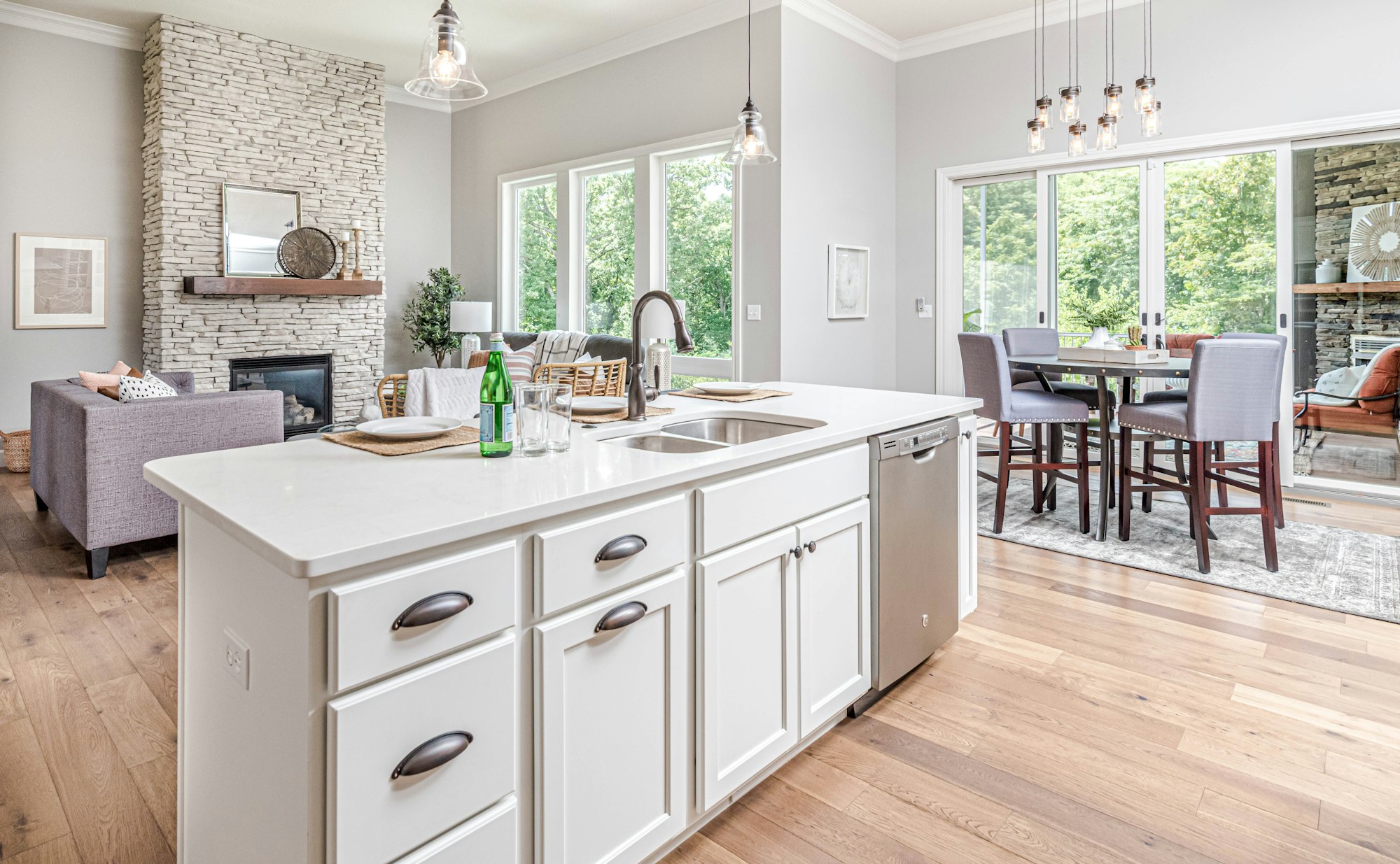
 Anthony Painter
 Anthony Painter
 Anthony Painter
Member discussion