

The Specification
Introduction & Method
Continuing our series asking ChatGPT to review Australia's leading project home builders, this instalment looks at Hotondo Homes. Established in 1979 as a family-owned Australian business, Hotondo moved to a franchise model in 1993. It's now one of the country's largest building networks, with more than 80 independent builders across metropolitan, regional and rural areas.
Each Hotondo Homes builder is independently owned and operated, combining local operators with the resources of a national network.
That independence means experiences vary between locations. For example, in February 2025 Central Coast builder Clarke Homes, formerly trading as Hotondo Homes, entered voluntary administration with several projects incomplete.
Below, ChatGPT reviews Hotondo's inclusions, customer experiences and overall performance. At the end, I've added my own take and the questions I'd ask before signing.
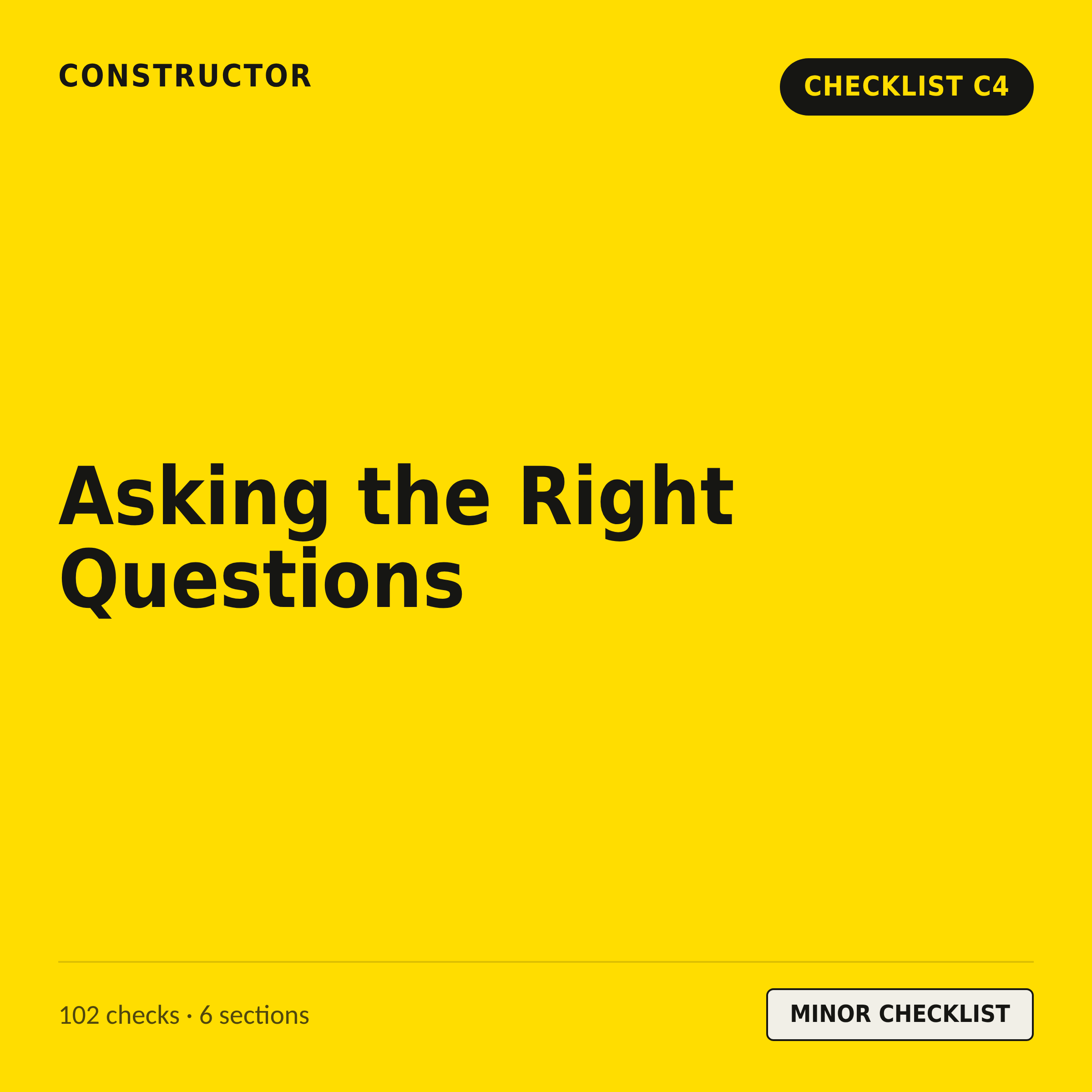
C4 - Asking the Right Questions Checklist
$59.00 AUD
Checklist Type: Minor
Form Factor: Fillable, print-ready PDF (A4, 15 pages) plus the C4 Explainer PDF (35 pages)
When to use: Choosing a builder (before you pay a deposit or sign)
102 questions to ask every builder on your shortlist, including a visual check of one of their current sites. Compare like for like and choose your builder with confidence before you pay a deposit.
Method
We followed the method set out in the first post of this series: a master instruction (prompt), then a series of step-by-step prompts, recording ChatGPT's output below. The specification reviewed is the Hotondo Homes "Sanctuary" inclusions list shown above. Inclusions change, so check the current version with your local builder.
 Anthony Painter
Check out our original post about this blog series here. Get the Master Prompt and try it yourself.
The Chat GPT Review of Hotondo Homes
Editor's note: this is AI-generated commentary on the builder's published inclusions list. It's unverified opinion, not a statement of fact about any franchisee. Where the AI got something wrong or out of date, we've added an editor's note.
Quality Review
Materials and Methods – Quality or Cost-Cutting?
The materials and fixtures listed throughout suggest standard project builder-grade selections—not poor quality, but certainly not premium. These are adequate for compliance and basic functionality, but lean towards cost-effectiveness over long-term durability or luxury.
- Framing and Slab: Timber framing and an M-Class slab are industry standard. M-Class is acceptable for most sites but may not suit reactive or unstable soils without upgrade. No mention of screw pier options unless site demands it—costs likely passed on via variations.
- Cladding and Roofing: James Hardie lightweight cladding and Colorbond or concrete tiles are both compliant, functional choices. These are typical for mass-market builds. No mention of sarking or anticon beneath Colorbond, which can affect thermal and moisture performance.
- Windows and Doors: Dowell aluminium sliding windows are a budget product with limited energy efficiency unless upgraded. No mention of double glazing. Front door is from Corinthian’s builder range—not poor, but standard.
- Internal Finishes: 2400mm ceiling height is entry-level. No raised ceilings offered as standard, which affects the home’s spatial feel. MDF skirting and architraves are common; not high-wear resistant. Flush panel internal doors and standard rose handles again confirm basic fit-out.
- Joinery and Surfaces: Laminex benchtops and cabinetry are laminate, not stone or engineered surfaces—affordable and functional, but not premium. Splashbacks are tiled rather than glass, which is lower-cost and less contemporary.
- Sanitaryware: Caroma and Clark fittings are respectable but chosen from their entry-level ranges. No mention of ceramic vs. plastic cisterns or mixer cartridge quality. Tiled shower bases are better than acrylic ones but require quality workmanship to avoid leaks.
- Heating/Cooling: Only included in Victoria. No evaporative cooling, reverse-cycle aircon, or ceiling fans in standard scope elsewhere. Thermal comfort may be compromised without upgrades, especially in hotter climates.
- Insulation: Ceiling (R4.1) and wall (R2.5) insulation meet 6-star minimum NCC energy rating requirements. No indication of wrap quality (perforated vs. vapour-barrier). Garage and outdoor areas excluded, which is standard.
- Electrical and Safety: Clipsal Iconic range is basic but functional. Two TV points, two phone points, and batten light fittings are minimal. No LED downlights or data cabling. No mention of NBN conduit or home automation.
- Kitchen Appliances: Artusi brand is a mid-to-low tier appliance supplier. It's not as well-regarded as Bosch, Westinghouse, or Electrolux. The cooker is large (900mm), which sounds premium, but may be a trade-off to avoid including separate oven/microwave towers.
- Hot Water: Chromagen 26L continuous flow system is a standard gas unit. Known to be serviceable but not a standout brand. VIC homes get a solar system, but other states receive gas only—missed opportunity for environmental performance upgrades.
Editor's note: two corrections. First, "M" is a site (soil) classification under AS 2870, not a slab type; the slab is designed to suit the site class, so an "M-Class slab" really means a slab designed for a moderately reactive site. Second, 6 stars is out of date. NCC 2022 requires 7-star NatHERS for most new homes (in Queensland from 1 May 2024). Ask the builder for your home's NatHERS certificate.
Value for a Prospective Purchaser – Fair or Inflated?
The inclusions list is consistent with what one would expect from a mass-market builder working to a budget. It is not luxurious, but it is sufficient to meet minimum compliance and deliver a finished home ready for occupancy.
There is no overt attempt at deception, but the presentation is polished with marketing language like “stunning selection” and “flawless blend,” which belies the basic nature of the products.
There’s minimal transparency about upgrade paths or what’s excluded. Key elements that often attract variation costs (e.g. driveways, flyscreens, fencing, landscaping, air conditioning, stone benchtops, LED lighting) are not mentioned, suggesting they are outside the standard inclusions or region-dependent.
This omission can lead to significant variation pricing, which may cause price escalation well beyond the advertised base price. The phrase “subject to change at any time without notice” adds uncertainty for purchasers locking in expectations.
Notable Omissions or Red Flags
- No LED lighting: Basic batten holders throughout suggest additional electrical work will be needed post-handover or through upgrades.
- No air conditioning outside VIC: This is a major omission in most climates.
- No stone benchtops: Laminex is fine for budget builds, but most buyers now expect at least engineered stone in kitchens.
- No flooring specification outside of wet areas: There’s no mention of carpet, laminate, or timber flooring to bedrooms/living areas, suggesting this is either an upgrade or not included at all.
- No flyscreens or window locks: Often required for safety and ventilation; these may be added later at additional cost.
- Minimal electrical provisions: No USB points, smart wiring, or even standard NBN conduit referenced.
- Tiling in wet areas only to 100mm skirting: Wall tiling is unspecified in height and extent; low tiling may look incomplete and need future attention.
- Garage insulation not included: May lead to increased heat transfer to adjacent rooms.
Summary Judgement
This is a functional but tightly cost-controlled specification. It is consistent with a builder competing on price and volume, not on quality or design innovation. Nothing is non-compliant, but little is inspirational either.
Prospective buyers should expect to pay more for many modern-day expectations, and should review upgrade price lists carefully. The framing, roof, wet area waterproofing, and services installation will ultimately determine the quality of the build—but based on this specification alone, the focus is on affordability, not durability or high-end finishes.
Language Review
The Hotondo Homes "Sanctuary" inclusions list employs marketing language that is polished but lacks specificity. This stands in contrast to the National Construction Code (NCC) and Australian Standards (AS), which are characterised by precise and unambiguous terminology to ensure clarity and compliance.
Clarity and Conciseness
The NCC and AS documents are designed to be clear and concise, minimising ambiguity. They define terms explicitly to ensure consistent interpretation across the industry. For example, the NCC provides a comprehensive glossary to clarify terminology.
In contrast, the inclusions list uses terms like "Builder's Standard Sanctuary Range" without defining what this range encompasses. This vagueness can lead to varying interpretations and expectations.
Potential Loopholes and Misunderstandings
Several phrases in the inclusions list are open to interpretation:
- "Region specific": This term appears multiple times without clarification, leaving it uncertain how specifications might vary by region.
- "Design specific": Used to describe features that depend on the design, but without detailed explanation, it’s unclear which designs include which features.
- "Allowance": Terms like "Site Costs Allowance" suggest a provision but lack detail on what is covered, potentially leading to unexpected costs.
- "From Builder's Standard Sanctuary Range": Without a clear definition of this range, the quality and selection of materials remain ambiguous.
- "Subject to change at any time without notice": This phrase indicates that specifications can be altered unilaterally, which could affect the final build without the purchaser's knowledge.
These terms lack the precision found in regulatory codes, potentially leading to misunderstandings or disputes.
What They Say vs. What They Do
Discrepancies Between Hotondo Homes' Marketing and Public Feedback
Hotondo Homes presents itself as a reputable builder, emphasising customer satisfaction and quality construction. This image is bolstered by accolades such as being named Australia's #1 Home Builder in Customer Excellence at the 2024 ProductReview.com.au Awards. Additionally, the company highlights achieving 400 five-star reviews on ProductReview.com.au.
However, public feedback reveals inconsistencies with this portrayal. For instance, a Reddit user in the AusPropertyChat forum cautioned about the financial stability of some Hotondo franchisees, noting that "Some Hotondo franchisees went under in 2022. Check out their financial stability before proceeding."
Furthermore, discussions on the Homeone forum indicate issues with specific franchises. A user reported that a builder operating under the Hotondo label abandoned projects, leading homeowners to claim building insurance—a process described as not user-friendly.
These accounts suggest that while Hotondo Homes promotes a positive image, individual franchise experiences may vary, and some clients have faced significant challenges.
Key Risks for Consumers
- Franchise Variability: Hotondo Homes operates on a franchise model, meaning each location is independently owned and operated. This structure can lead to inconsistencies in build quality, customer service, and financial stability across different franchises.
- Financial Stability: Instances of franchisees entering administration or liquidation pose risks to consumers, including project delays, financial loss, and the stress of navigating insurance claims.
- Transparency in Communication: Discrepancies between marketing claims and actual customer experiences highlight potential issues with transparency, possibly leading to unmet expectations.
In summary, while Hotondo Homes markets itself positively, consumer experiences suggest variability among franchises and potential issues with transparency and financial stability. The inclusions list's ambiguous language further raises concerns about clarity and accountability in the building process.
Rate the Builder (1–10)
Rating: 5 out of 10
Rationale:
- Delivery on Time: Hotondo Homes operates under a franchise model, and performance varies significantly between franchises. Some franchises have delivered on time, but there are credible reports of delays and, in several cases, franchise collapses that halted builds entirely. This inconsistency reduces confidence in reliable scheduling.
- Delivery to Cost: The base inclusions are presented with vague terms such as “allowance,” “region specific,” and “design specific.” These open the door for variation costs and unexpected overruns. There is a lack of transparency about what’s genuinely included. Reviews and forum posts suggest that some clients were caught off-guard by these extras.
- Consistency of High-Quality Work: Standard inclusions use cost-effective materials that meet minimum code requirements, not premium quality. Fit and finish appear dependent on the individual franchise and trade supervision. While some customers report satisfaction, others have experienced poor workmanship or needed to escalate complaints.
Summary:
This is a mid-range project builder with a variable track record. Some clients receive a compliant, well-built home at a reasonable price. Others face delays, added costs, or quality concerns. The franchise model introduces inconsistency, making the experience highly dependent on the local operator.
My Take
I broadly agree with the AI on the specification: it's a budget, volume-builder list, and the real cost sits in what isn't mentioned. The bigger risk with any franchise network is the local operator, not the brand. Before you sign with any franchise builder, ask:
1. Who exactly is the contracting entity, and what is their QBCC licence number and financial category?
2. How many homes are they building right now, and who will supervise mine?
3. What does the site costs allowance cover, and what happens if my site needs more?
4. Which items marked "region specific" or "design specific" are actually included in my quote?
5. Can you put the full specification for my home, not the brochure, into the contract?
The C4 Asking the Right Questions Checklist above has the full list.
 G.J. Gardner Homes Review By ChatGPTWe ask ChatGPT for its unbiased review of home builder G.J. Gardner Homes. Read on to learn what it had to say.
 Coral Homes Builder Review By ChatGPTWe ask ChatGPT for its unbiased review of home builder Coral Homes. Read on to learn what it had to say.
 CMA Homes Builder Review By ChatGPTWe ask ChatGPT for its unbiased review of home builder CMA Homes. Read on to learn what it had to say.
 Creation Homes Review By ChatGPTWe ask ChatGPT for its unbiased review of home builder Creation Homes. Read on to learn what it had to say.
 Brighton Homes Review By ChatGPTWe ask ChatGPT for its unbiased review of home builder Brighton Homes. Read on to learn what it had to say.
 Simonds Homes Review By ChatGPTWe ask ChatGPT for its unbiased review of home builder Simonds. Read on to learn what it had to say.

