
June home maintenance is a look-and-listen check of your electrics, a test for hidden water leaks, and the quarterly clean. It takes about an hour and follows the June page of your printed calendar, in the same order.
C18 - 6 Month Maintenance Checklist
$59.00 AUD
Checklist Type: Minor
Form Factor: Fillable, print-ready PDF (A4, 19 pages) with a maintenance calendar and log
When to use: After handover: your first six months and ongoing home maintenance
A 110-point home maintenance checklist with a calendar and log. Plan preventative maintenance, find small problems early and keep your warranties in good order.
✓ Authorship verified on the blockchain · View certificate
This month's checks
1Look over the switchboard

Heat, burning smells and discolouring are early signs of a loose connection or an overloaded circuit. Caught early, it's a simple repair. Missed, it's a fire risk.
- Open only the outer door you'd normally use to reach the switches.
- Look and smell. Use a torch if it's dim.
- Check that every switch is labelled, and note any that are off or tripped.
- Close the door. Never remove a cover or panel, and never touch anything inside except the switches.
A burning or hot plastic smell, brown or black marks, buzzing, melted plastic, or a switch that trips again and again.
If you see or smell any of these. Call a licensed electrician straight away.
In Queensland, electrical work must be done by a licensed electrical worker. DIY electrical work is illegal, so looking is as far as you go.
2Check power points and switches aren't warm, loose or damaged
A loose or overheating power point can arc and start a fire inside the wall.
- Walk room by room and look at every power point and light switch.
- Rest the back of your hand lightly on the plate of any that's in use. It shouldn't feel warm.
- Check plugs sit firmly and don't fall out.
- Look for overloaded power boards and frayed cords.
Warm or discoloured plates, crackling, sparks when you plug in, cracked covers, or lights that flicker.
If any outlet is warm, scorched, cracked or loose in the wall. Stop using it and call a licensed electrician.
3Check the water meter stays still with every tap off

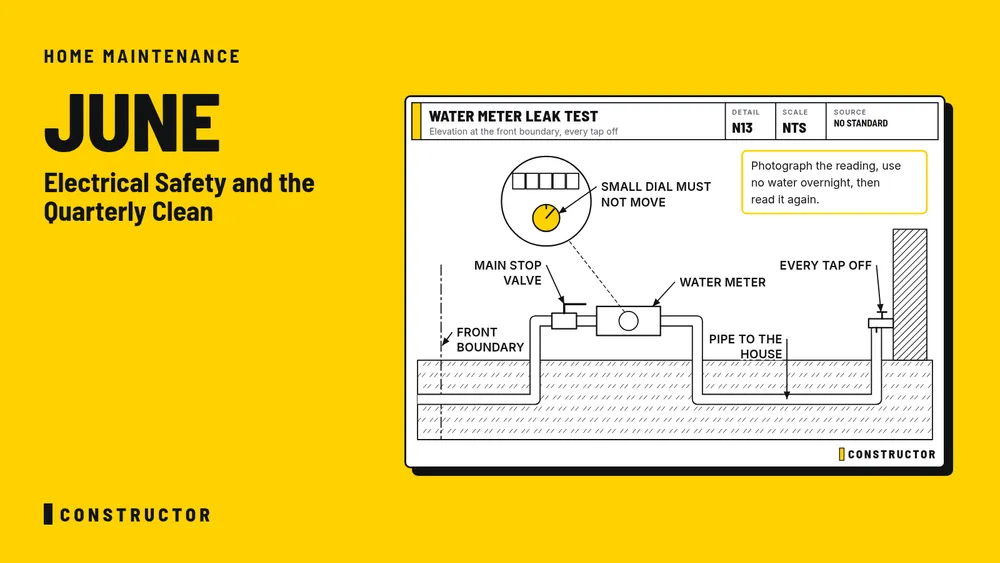
A moving water meter with everything off is a hidden leak, often in a wall or under the slab. You may not see it until the floor or the bill shows it.
- Find your meter, usually near the front boundary.
- Turn off every tap and water-using appliance, including irrigation and any tank pump top-up.
- Photograph the reading, including the red numbers.
- Use no water, ideally overnight, then read it again.
Any change in the reading, or a small dial that keeps turning. Also watch for a damp patch, a sudden rise in your bill, or the sound of running water.
If the meter moves. Check toilets and taps first. If you can't find the cause, a licensed plumber can trace the leak.
4Clean the rangehood filters, dryer vent and dishwasher filter
A greasy rangehood filter stops pulling steam and smoke. A blocked dryer vent is a fire risk. A dirty dishwasher filter leaves food on the dishes.
- Rangehood: take out the metal filters, soak them in hot water and degreaser, or run them through the dishwasher. Dry them and refit.
- Dryer: clean the lint filter, then check the exhaust vent and outlet are clear.
- Dishwasher: twist out the filter, rinse it and clear the sump, as the manual says.
Grease dripping from the rangehood, clothes taking longer to dry, a hot dryer, or water left in the dishwasher base.
If the dryer overheats or the rangehood fan is noisy or dead. Use the maker's service agent.
5Wipe the ceiling fan blades and clean the shower screens
Dusty fan blades throw dust and allergens around the room. Soap scum and hard-water build-up on screens get harder to remove the longer you leave them.
- Turn the fan off at the switch and let it stop.
- Stand on a stable step ladder, not a chair. Wipe the leading edge of each blade.
- Watch the fan run. It shouldn't wobble or click.
- Clean the shower screens as the maker says, and check the seals and fixings.
A wobbling or noisy fan, a loose screen, a chip in the glass, or a seal that lets water out.
If the fan wobbles after cleaning (a licensed electrician) or the glass is chipped or cracked (a glazier).
The QBCC Guide (14.3) treats cracks in shower bases, screens and glass as defects in the first 12 months if visible from a normal viewing position. For glass that's 3 m (18.3).
6Review your home and contents insurance
It's the one June home maintenance job that needs no tools. If your cover doesn't match your home, a claim can fall short. New homes change quickly in the first year with landscaping, fences, solar and new furniture.
- Find your policy and the renewal date.
- Check the address, building type and features are correct.
- List what you've added since you moved in, and tell your insurer.
- Read what the policy says about storm, flood and accidental damage.
- Put the renewal date in your maintenance log.
A sum insured set before you added extras, missing flood or storm cover in an exposed area, or a lapsed policy.
If you're unsure what you're covered for. Ask your insurer or broker. This isn't financial advice, so check your own policy. My post on flood resilience and the insurance data is a useful read.
Where you live changes the timing
- North (QLD, NT, northern WA and northern NSW). It's the dry season. Plan outside jobs like paint, decks and sealing for the next few months.
- South (temperate Australia). It's winter. Have a licensed gasfitter service gas heaters, test the CO alarm and make sure the flues are clear.
Your June home maintenance list stays the same in both. Only the extras change.
Every month, as well
- Test every smoke alarm with the test button.
- Clean the air-con filters while you're using it.
- Check wet areas for mould and run the exhaust fans.
- Walk around: note new cracks, leaks, stains or sticking doors.
- Record what you did in your maintenance log.
The short version
June home maintenance is about looking, not fixing: the switchboard, the power points and the water meter tell you when to call a licensed trade. Then do the quarterly clean and check your insurance. The C18 6 Month Maintenance checklist covers each item, and what MEP means explains your home's services.
Next month: July home maintenance.
FAQs
Can I open my switchboard to have a look?
Only the outer door you'd use to reach the switches. Never remove a cover or panel. Anything beyond looking and resetting is a job for a licensed electrician.
How do I know if I have a leak under the slab?
Do the overnight meter test. If the reading changes with everything off and you can't find a dripping tap or toilet, call a licensed plumber.
What's the most important June home maintenance check?
The switchboard and power points. A burning smell or a warm outlet needs an electrician the same day.
How often is the quarterly clean?
Every 3 months, as C18 sets out. The calendar puts it in March, June, September and December, so it's part of June home maintenance.