
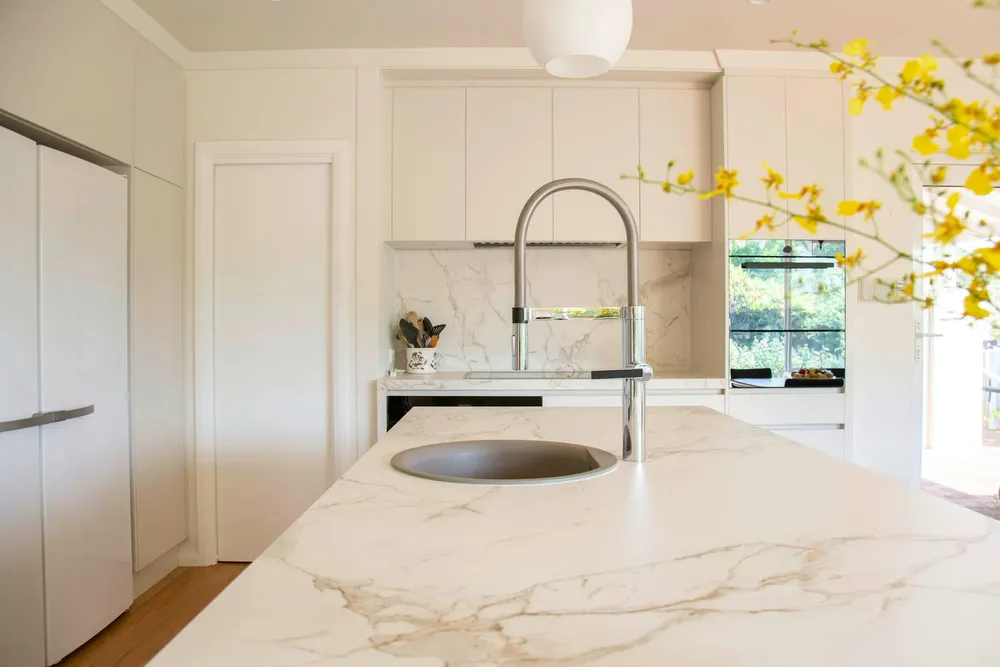
For years, engineered stone was the default benchtop in almost every new Australian kitchen. Then it was banned. The national engineered stone ban took effect on 1 July 2024, and Queensland enforces it through its work health and safety laws.
If you're building now, that changes your choices. Some display homes and older brochures still show the look, and plenty of people still call any benchtop "stone".
Here's what the engineered stone ban covers, what you can still choose, and what to check in your specification so you get the benchtop you think you're paying for.
C12 - Fixing Stage Inspection Checklist
$119.00 AUD
Last updated 28 Oct 2026 · Revision 5 · Free updates for life
Checklist Type: Major (Fixing Stage)
Form Factor: Fillable, print-ready PDF (A4, 40 pages)
When to use: Fixing stage: plasterboard, eaves, joinery, fixout carpentry and tiling
A 159-point fixing stage checklist. Inspect plasterboard, eaves, joinery, doors, skirtings and tiling over two visits, before the stage is signed off.
Why engineered stone was banned
Engineered stone can contain very high levels of crystalline silica, far more than most natural stone. Cutting, grinding and polishing it creates fine silica dust. Breathing that dust has been linked to silicosis, an incurable lung disease. Cases among stone benchtop workers led to the engineered stone ban.
The risk is to the workers who fabricate and install it. A finished benchtop that isn't cut or disturbed doesn't release dust in normal use.
What the engineered stone ban covers
Under the work health and safety laws, from 1 July 2024:
- Manufacturing, supplying, processing and installing engineered stone benchtops, panels and slabs is prohibited.
- Engineered stone means an artificial product containing 1% or more crystalline silica (by weight), made by combining natural stone materials with things like resins, water or pigments and hardening it.
- Contracts signed before the ban don't override it. Work had to stop from 1 July 2024 regardless.
- Imports of engineered stone benchtops, panels and slabs were also banned from 1 January 2025.
What's still allowed under the engineered stone ban
The ban is narrower than many people think. These are not prohibited:
- Natural stone such as granite and marble.
- Porcelain and sintered stone that don't contain resin.
- Concrete and cement products.
- Ceramic tiles, bricks and pavers.
- Products with less than 1% crystalline silica, which aren't classed as engineered stone. Some manufacturers now sell low-silica or silica-free alternatives.
One catch: some of these materials still contain crystalline silica. Since 1 September 2024, stronger rules apply to processing all crystalline silica materials, so fabricators cutting natural stone or porcelain must control dust. That's their job, not yours, but it can affect price and lead times.
Your benchtop options
Each material left after the engineered stone ban has trade-offs. Here's how I'd think about them for a family kitchen.
- Laminate. The budget choice, and better than it used to be. Huge range of colours and stone looks. Can be damaged by hot pans and knife cuts, and joins and edges can swell if water gets in.
- Porcelain and sintered stone. The closest replacement for the engineered stone look. Hard, heat-resistant and stain-resistant. Thin slabs can chip at edges and corners, need careful support, and need a fabricator experienced with them.
- Natural stone. Granite is tough and heat-resistant. Marble is beautiful but stains and etches with acids like lemon juice and wine. Both need sealing.
- Solid surface (acrylic). Seamless, with integrated sinks possible, and minor scratches can be sanded out. Less heat-resistant than stone, so use trivets.
- Timber. Warm and repairable, but needs oiling and care around the sink.
- Stainless steel. Hygienic and tough, with a commercial look. It scratches, though the scratches blend over time.
- Low-silica alternatives. Newer products marketed as engineered stone replacements. Ask for the product's crystalline silica content in writing.
My rule for a busy kitchen: put your money in the island and the main prep bench, and don't be afraid of a cheaper material in the laundry or butler's pantry.
What to check in your specification
This is where people get caught. Since the engineered stone ban, "stone benchtops" in a specification tells you very little.
- The exact material. Porcelain, sintered stone, granite, laminate or a named low-silica product. Not just "stone".
- The brand, range and colour. Or a clear allowance if you haven't chosen yet.
- Thickness and edge profile. Thin porcelain on a thicker built-up edge looks different from a solid slab.
- Waterfall ends and splashbacks. Are they included, and in what material?
- Cut-outs. Sink, cooktop and tap holes, and whether the sink is undermount.
- Which rooms. Kitchen, butler's pantry, laundry and vanities can all be different.
If your plans or brochure still show an engineered stone product, ask the builder in writing what will replace it, and whether the price changes. Changes after signing usually come through as a variation, so sort it out before you sign. Check your own contract for how substitutions are handled, and get legal advice if you're unsure.
My article on specification and fittings schedule questions covers how to tighten the rest of your selections.
What to check at installation
Benchtops go in at the fixing stage, and that's when you should look closely, whatever material you chose after the engineered stone ban:
- Material and colour match your selection.
- Joins are tight, level and placed where agreed, not across the sink or cooktop.
- Edges and corners are free of chips, especially on porcelain.
- Overhangs on islands are supported as the manufacturer requires.
- Silicone to splashbacks and sinks is neat and continuous.
- No damage from other trades after installation.
Our C12 Fixing Stage checklist covers benchtops along with cabinetry, doors and fix-out. It's on the Checklists page.
If you already have engineered stone
The engineered stone ban doesn't require anyone to remove existing benchtops. Engineered stone installed before 1 July 2024 can stay, as long as it isn't cut or disturbed.
Removal, repair and minor modification of this "legacy" engineered stone is still permitted under strict controls, and in Queensland the business doing it must notify the regulator first. If you're renovating an older kitchen, don't let anyone cut or grind it without proper dust controls.
The short version
The engineered stone ban started on 1 July 2024 and covers engineered stone benchtops, panels and slabs with 1% or more crystalline silica. Natural stone, resin-free porcelain and sintered stone, laminate, timber, stainless steel and low-silica products are still available. Name the exact material, brand, thickness and edges in your specification, not just "stone".
A benchtop is easy to upgrade later. Get the specification right and spend where you'll use it most.
FAQs
When did the engineered stone ban start?
The ban on manufacturing, supplying, processing and installing engineered stone benchtops, panels and slabs started on 1 July 2024. An import ban followed on 1 January 2025.
Is porcelain banned too?
No. Porcelain and sintered stone without resin are not prohibited, though fabricators must still control silica dust when cutting them.
Do I need to remove my existing engineered stone benchtop?
No. Installed engineered stone can stay if it isn't disturbed. Removal or repair must be done under strict controls by a business that has notified the regulator.
Is a "silica-free" engineered stone legal?
Products with less than 1% crystalline silica aren't classed as engineered stone under the engineered stone ban. Ask for the silica content in writing.


