

So when it comes to roofing you have a few choices.
The two main roof coverings to choose from are metal (such as Colorbond) or tile. Both have strengths and weaknesses, as well as design and cost considerations. There are also a few "add-ons" that don't get much publicity but are worth considering before it's too late (and your roof is on). So, in the spirit of orderly banter, I'll start with the humble tile roof.

C9 - Tile Roof, Box Gutter and Flashing Inspection Checklist
$59.00 AUD
Last updated 5 Oct 2026 · Revision 1 · Free updates for life
Checklist Type: Minor
Form Factor: Fillable, print-ready PDF (A4, 23 pages)
When to use: Roofing stage (tile roof), before the linings go in
A 177-point checklist for tiled roofs. Check tiles, sarking, battens, ridges, gutters, box gutters and flashings before the linings go in, when problems are easier to fix.
1. The Look
Tiled roofs are traditional in Australian construction. The main reason for this would be cost and market-driven demand. Whilst there are many different profiles and materials that can be used in roof tiles, the traditional profile featured below still seems to be the favourite.
There's a large range of roof profiles and materials you "can" choose from, but most people don't treat the roof as a feature of the home, just a contrasting colour to the rest of the facade. Architect-designed and custom homes are the exception, not the project and volume homes I cut my teeth on.
So, why do people love tiles? They're solid, quiet in the rain and look the part. I've also heard that after a few drinks they have quite the sense of humour too.
2. They Are Heavy!
I know I shouldn't have to say it, but concrete is heavier than metal. The design load for a tile roof is around 40 to 50kg per m² (even more when wet), compared with 3 to 4kg per m² for a metal roof. Because of that weight, the trusses for a tiled roof must be more solidly designed and are installed at 600mm centres. Under a metal roof, trusses can go at 1200mm centres, with intermediate ceiling joists (ICJs) at 600mm centres and hanging beams to support the ceiling linings. That's not ideal for straight ceiling lines, but it means less roof framing (material cost) and less labour to install.
Metal isn't automatically cheaper than tile, though. I compare the costs in Colorbond vs concrete roof tiles.

3. Tie down
Your site's wind classification is set by your engineer under AS 4055, based on the site, not the roof material. In South East Queensland most homes are N2 or N3; coastal and exposed sites can be N4, and further north you get into cyclonic classifications (C1 and up), so check your soil and wind report. For a tile roof, the classification decides how many tiles are clipped to the roof battens, and the battens are nailed to the trusses, completing the bracing and forming the base the tiles sit on. As a rough guide, N2 sites often have every second tile clipped and N3 sites every tile, but the exact fixing depends on the roof pitch and tile type, so check AS 2050 or the tile manufacturer's fixing guide.
See the small metal bracket with the "dog leg" sticking out from the valley and clipping around the tile in the picture below? That's the tile clip I'm referring to.

4. Valley Tiles - Cut Tiles
The valley is a unique area of the roof for a few reasons. One reason is that there are more clips per roof tile in this location than others. Additional clips are used in this area because small sized, cut “valley tiles”, are prone to dislodging, falling into the valley or not sitting as they should. Additional clips are installed here to prevent this from happening.
Another reason is that it’s only in this area of the roof that half the tile may be sitting on the timber batten and part of the tile may be held up only by the tile before it, the tile overlap.
Clients often ask me if I can flatten the last one or two cut tiles in the valley so they sit "flat". The valley tiles kick up because part of each cut tile sits on the valley iron (the channel water runs down into the gutters). The valley iron has an upturn on both edges to stop wind-blown water getting into the roof cavity. If we flattened it to fix a few slightly raised tiles, we could create a much bigger leak.
5. Sarking
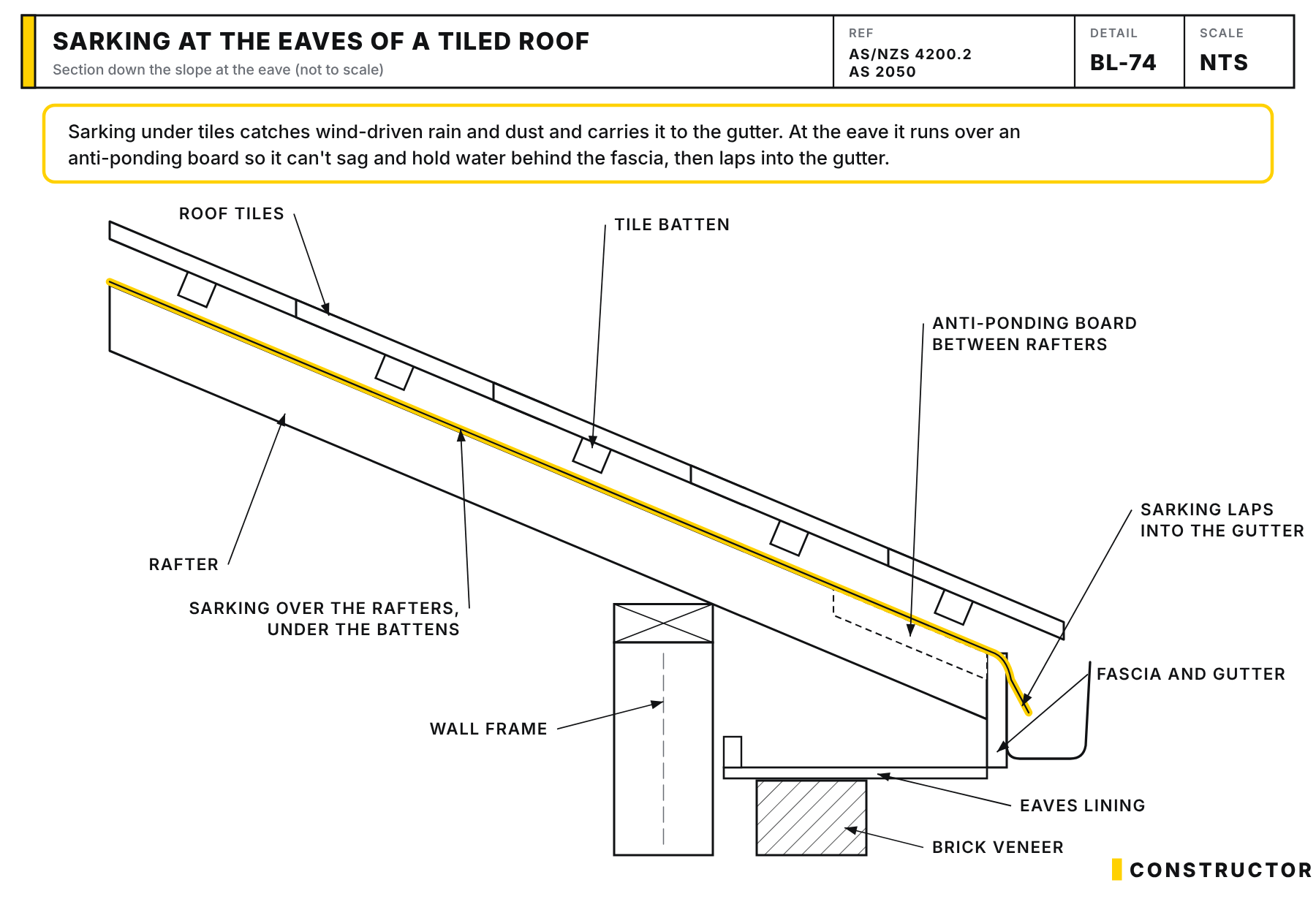
The green paper like product you see sitting under the timber roof battens, that the tiles are sitting on top of, is what is called sarking.

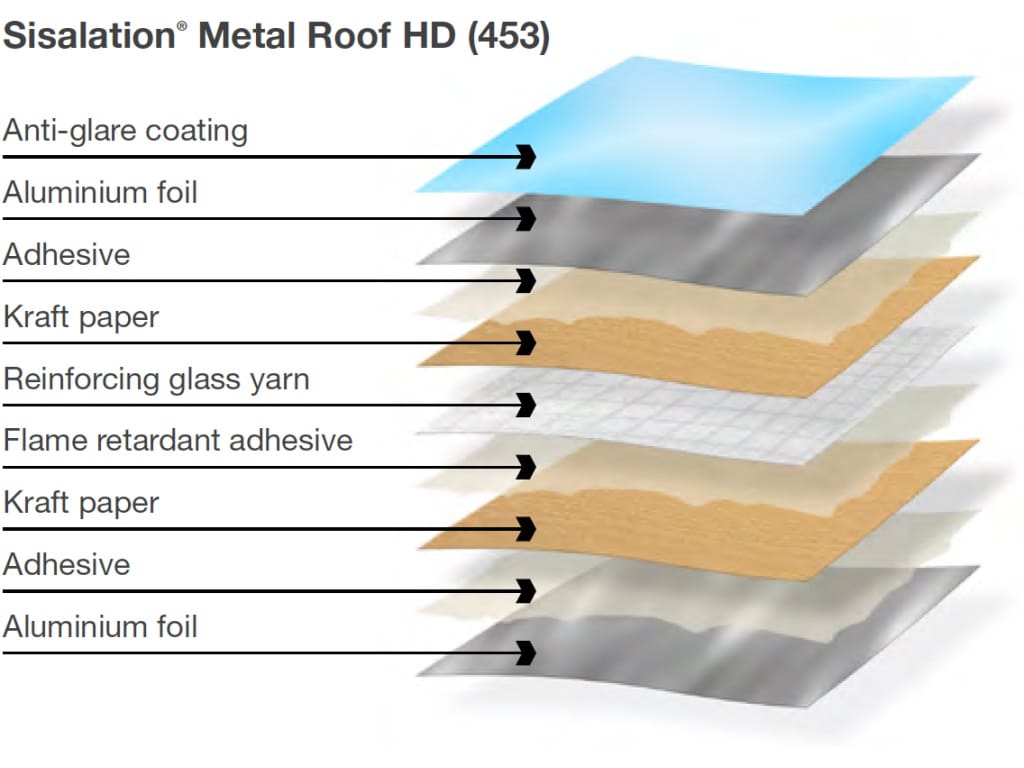
Sarking is a membrane laid under the battens. It catches wind-driven rain and dust that get past the tiles, stops condensation dripping onto the ceiling, and (if reflective) cuts radiant heat into the roof space. It's required on bushfire-prone sites under AS 3959. For the extra cost, I believe it's definitely worth it on any tile roof. More in our sarking guide.
This great little image shows you some of the benefits of installing sarking on your home.
6. Valley seal (dry valleys) & Storm seal (wet valleys)
Valley seal is an upgrade for dry valleys (no bedding and pointing) or wet valleys (bedded and pointed) and can be installed on either. It's a foam product coated in bitumen that repels water, keeps pests out of the roof cavity and stops leaves building up. The image below shows valley seal in position.

Storm sealing means the gap between the cut valley tiles and the valley iron is bedded and pointed with mortar, closing it off to wind-driven rain, debris and embers. It's especially useful on valleys that face the prevailing weather, or in bushfire-prone areas.
Most clients I mention storm sealing to are completely unaware it can be done. I highly recommend asking for it if you're worried about your home's orientation to the prevailing weather or you have bushfire construction requirements.
7. Gutter Guard
Gutter guard is a great product (shown below on the valleys and gutters of a metal roof) if you have trees around your home. Instead of leaves and wind-blown debris getting caught in your gutters, it falls to the ground where it's easily cleaned up. No more gutter cleaning, and no more working from a ladder. It can be expensive for the whole house, so you might only install it where trees overhang.

 Colorbond vs Roof Tiles: Which is Best for Your New Home?Looking for roofing options for your new home? This article compares Colorbond roofing and concrete roof tiles, including costs and maintenance considerations, to help you make an informed decision.
 Roof Sarking Explained: Essential Protection for Your HomeLearn about roof sarking, a vital component in home construction. This guide covers what roof sarking is, its benefits like moisture protection, temperature control, and energy efficiency, and why it’s a crucial investment for the longevity and safety of your home’s roofing system.
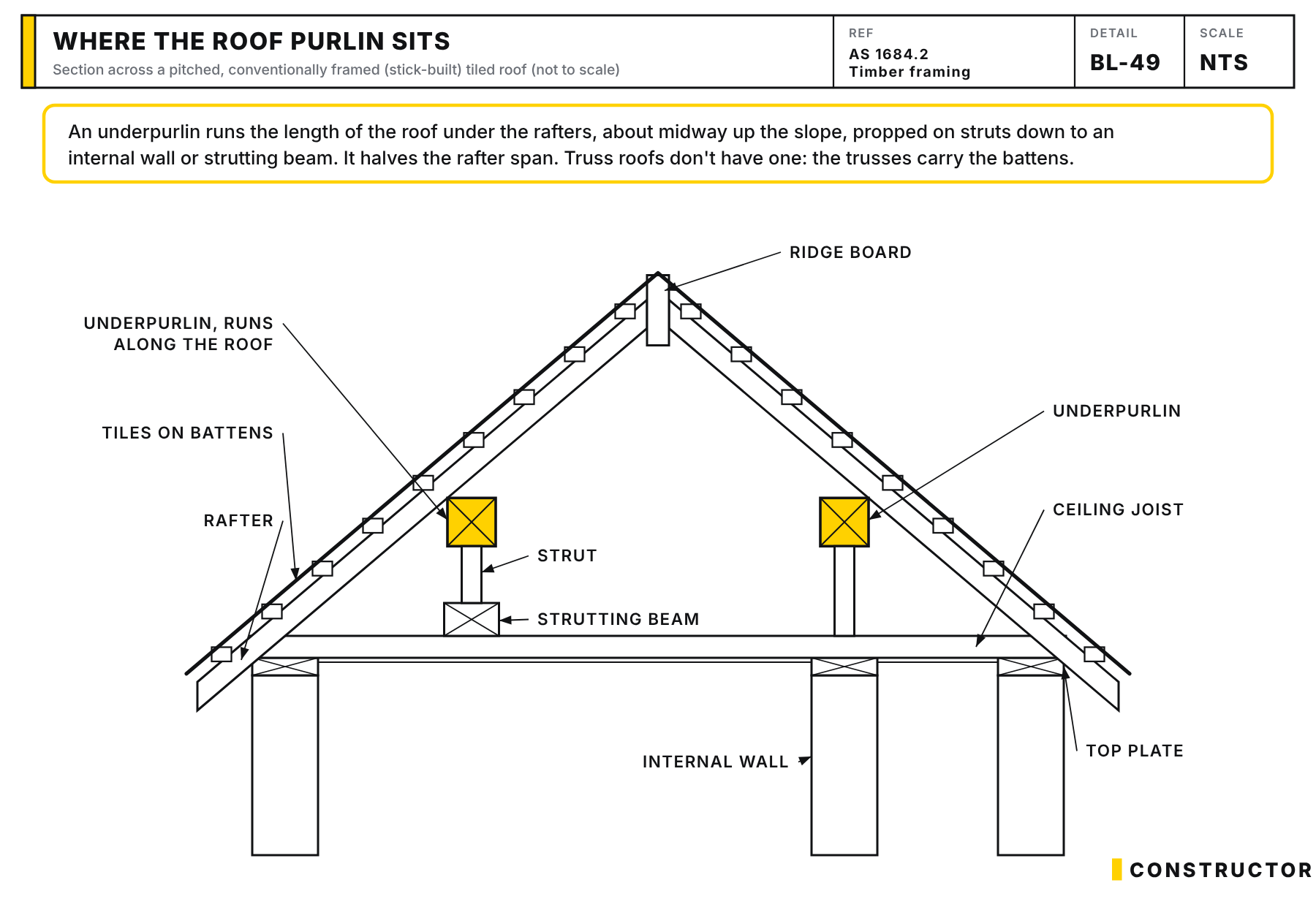 Roof Purlins Explained: Types, Uses & Construction TipsRoof purlins are the hidden heroes holding your roof together. In this post we explain what they are, why they matter, and how to choose the right type.
 The Impact of Roof Colors on Urban Heat Islands in AustraliaThe choice of roof colour in your home is more than just an aesthetic decision; it has real implications for the local climate. This article offers a discussion of the scientific, aesthetic, and practical aspects of roof colours.
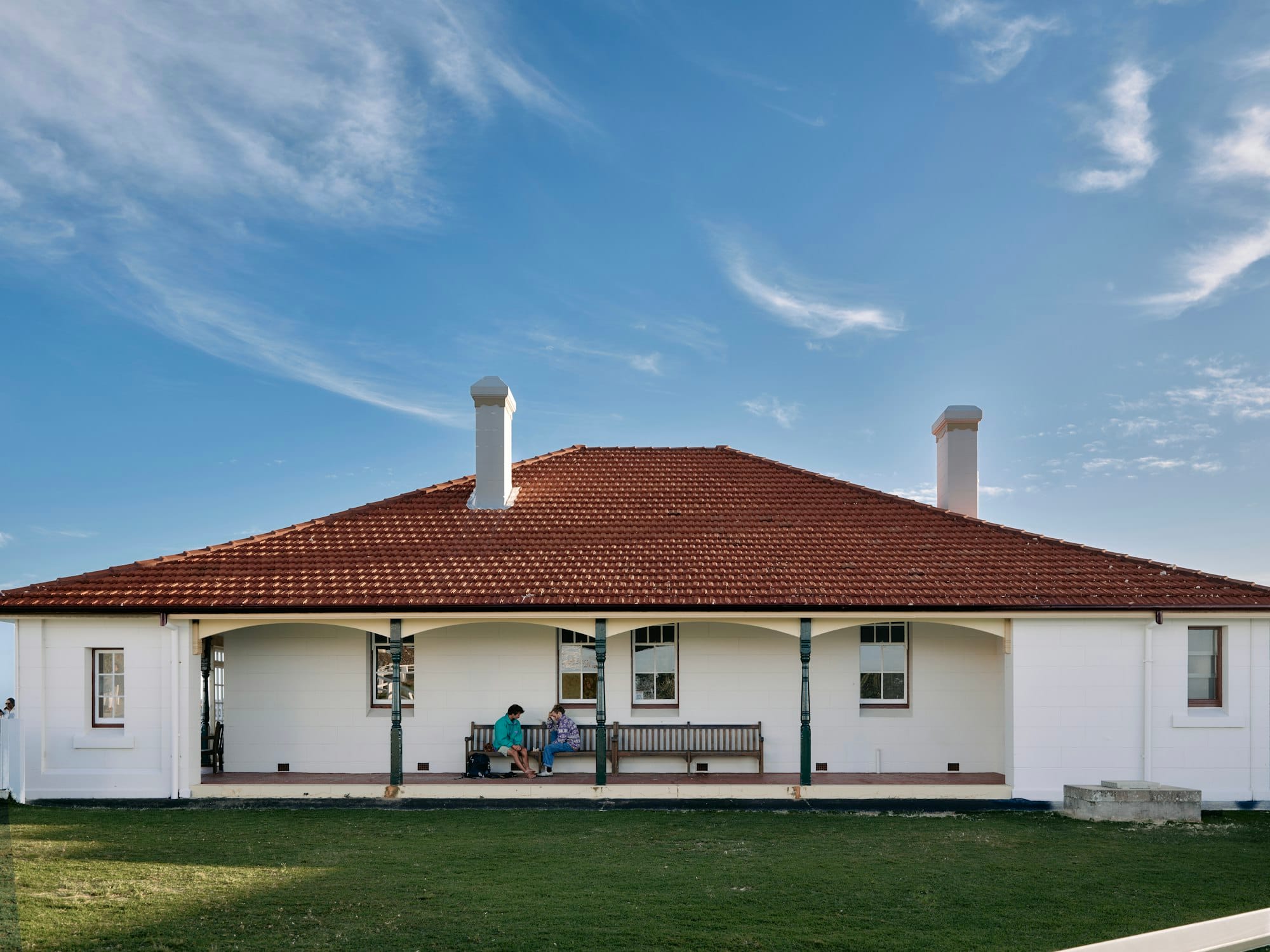 Roofing Elements Simplified: A Guide to Roof ConstructionDemystify roofing elements with this beginner-friendly guide. Covering gables, Dutch gables, verge overhangs, and more, it breaks down complex roofing terms into simple language, helping you communicate effectively with architects and builders and understand the structure of your home’s roof.
 Comprehensive Guide to Roof Types, Styles, and MaterialsGet familiar with various roof types, styles, and materials available in the world of construction through this guide. Understanding the advantages and charm of different roofing options can significantly influence the aesthetic and functional outcome of your project.

