

So you've been a residential building supervisor for a few years and reckon you've seen it all. But have you ever wondered if there's a better way to manage all the jobs you juggle every day? Most supervisors have never had proper project management training, and that's a shame, because a method like PRINCE2 can change how you work.
PRINCE2 stands for PRojects IN Controlled Environments. It's a structured method for managing any kind of project, and it gives you a common language and a set of processes for staying on top of cost, risk and quality. The end result: happier clients and a job done properly.


The Seven PRINCE2 Principles, Applied to House Building
PRINCE2 Foundation training is built around seven principles. Here's what each looks like on a residential job:
- Focus on Products: Define what "done" looks like before you start. On a house, that means a clear specification, drawings and acceptance criteria for each stage, so everyone knows what a finished frame or a finished wet area should look like.
- Manage by Stages: Break the job into stages and plan, monitor and control each one. A house already has natural stages: base, frame, enclosed, fixing and practical completion.
- Manage by Exception: Set agreed tolerances for time, cost and quality, and only escalate when a stage is forecast to go outside them. For example, the supervisor handles a two-day slip, but a two-week slip or a cost blowout goes to the construction manager.
- Defined Roles and Responsibilities: Everyone knows who decides, who delivers and who checks. On site, that's who signs off the slab, who books the frame inspection and who approves variations.
- Tailor to Suit the Project: Scale the method to the job. A single house doesn't need the paperwork of a hospital, but it still needs the structure.
- Continued Business Justification: Keep checking the project still makes sense. For a builder, that means the job is still viable at each stage, not just at contract signing.
- Learn from Experience: Review what went well and what didn't on every job, and carry the lessons to the next one. Defects that keep repeating are a sign this isn't happening.
With these skills you'll estimate timelines better, allocate resources better, spot risks earlier and deliver higher-quality homes. Homeowners notice. Quality really does start at the top.
What You Get Out of It
PRINCE2 training gives you the tools to deliver jobs on time and on budget, spot problems early and adjust quickly, and keep your team aligned and accountable with a common language. Applied across a business, that means fewer cost overruns and schedule slips, and more satisfied clients.
Once you've done the Foundation course, you can go on to the Practitioner level. But Foundation alone gives you the essentials.
Use Stage Claims as Go/No-Go Gates
Here's where PRINCE2 fits house building almost perfectly. Its 'manage by stages' approach uses go/no-go decision points at the end of each stage, and residential contracts already have them built in: the progress stage claims. It's almost like the whole process is mapped out for you.
For example, don't issue the frame stage claim until the frame has passed a documented frame inspection, the engineer has signed off any structural items, and any defects found are fixed. Do the same before the base, enclosed and fixing claims. You just need to tweak the way you work, and you'll notice a big improvement in quality.
Homeowners: ask your builder whether the supervisor uses inspections or stage gates before each progress claim is issued. If the answer is vague, that tells you something.
The Bottom Line
Project management training like PRINCE2 Foundation can make a world of difference. It changes how you approach your work, and gives you the skills to manage risk, control resources and lead a team.
The result? Happier clients, smoother builds and a more rewarding job for you. Upskill yourself and start managing quality from the top.
Recommended Course Provider for Prince2 training
Having completed the PRINCE2 Foundation and Practitioner courses, as well as earlier training through AIM (the Australian Institute of Management), we recommend AIM's courses. Their materials are comprehensive and easy to understand, and the training is practical. We've found other providers monotonous, with the trainer simply reading the material. Nobody wants to think, "I paid $2,500 for someone to read to me, and now I have to learn it all again on my own."
LINK to AIM Prince2 - https://www.aim.com.au/project-management/courses/project-management-fundamentals
Further Reading
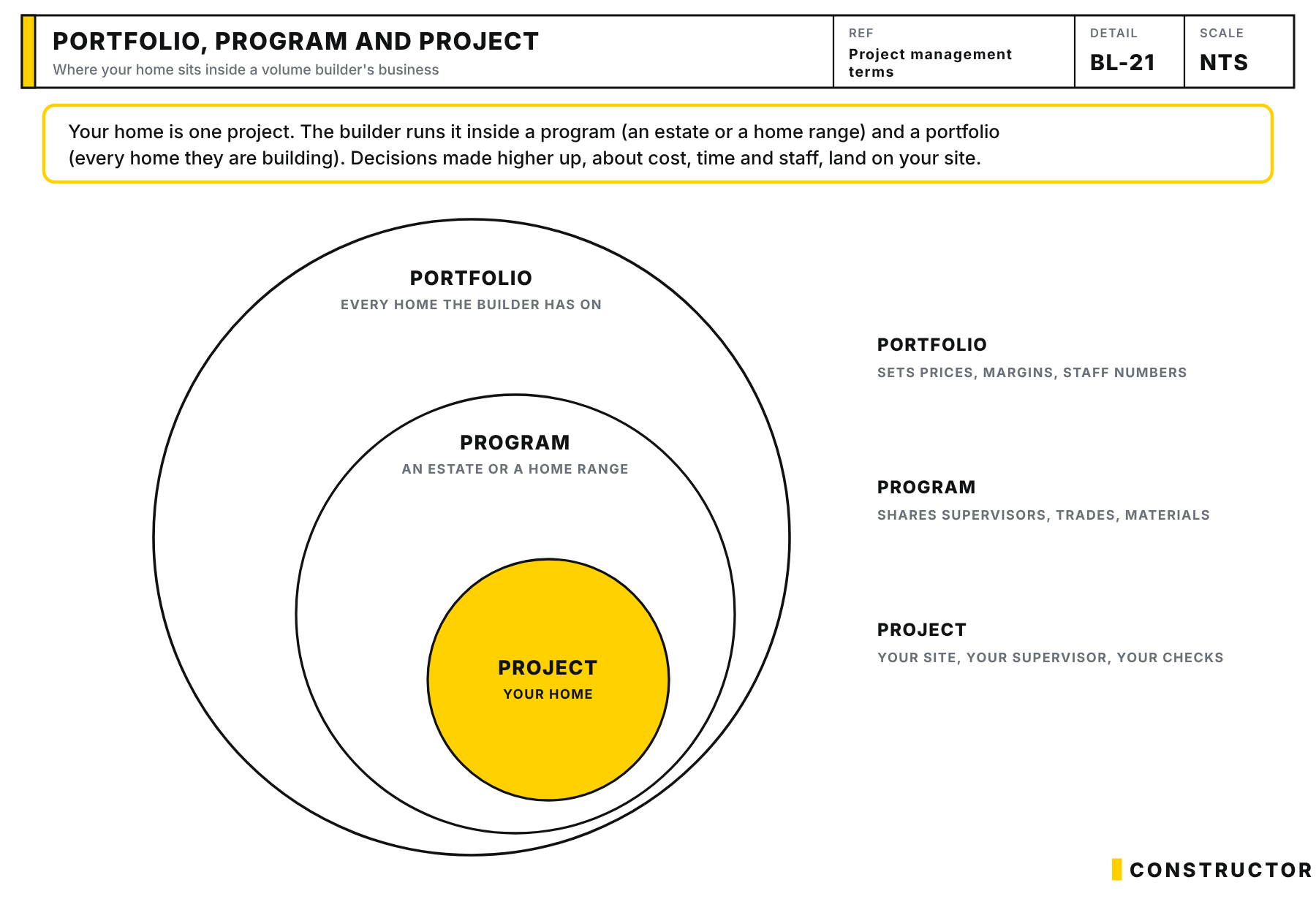 Insight Project Management: Projects, Programs + PortfoliosProject management involves overseeing various levels of scale and responsibility, from individual projects to larger programs and comprehensive portfolios. We explore these aspects in detail, providing our insights.
 Agile in Homebuilding: A Game-Changer or NotEver wondered if agile project management could enhance your homebuilding experience? While agile thrives in software development, its application in house construction offers both challenges and opportunities. Dive in to discover if agile’s iterative approach suits residential construction.
 Unlock Customer Loyalty Through Effective Project ManagementWondering why some residential builders have loyal customers while others don’t? The secret lies in effective project management. Learn how to transform your one-time customers into long-term advocates by mastering the phases of project management.


